5.Signing for services#
5.3Roadside stopping places – non-expressway#
5.3.2Signing#
The sign G9-Q05-1 bearing the legend ‘NOTICE-THIS AREA IS PROVIDED FOR THE CONVENIENCE OF THE TRAVELLING PUBLIC; MAX STAY 20 HRS; PENALTIES APPLY’, may be erected to advise travellers that a rest area is not a camping area and the maximum period travellers are permitted to remain at the rest area is 20 hours.
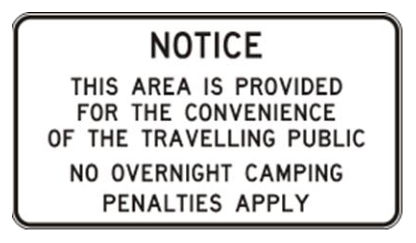
The sign G9-Q05-2 bearing the legend ‘NOTICE-THIS AREA IS PROVIDED FOR THE CONVENIENCE OF THE TRAVELLING PUBLIC; NO OVERNIGHT CAMPING; PENALTIES APPLY’, may be erected to advise travellers that the rest area is meant for short breaks to manage fatigue and must not be utilised as an overnight camping area. These signs may, where necessary, be erected at other roadside stopping places.
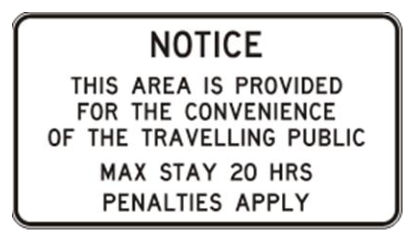
G9-Q05_1 · G9-Q05_2
5.4Commercial services – non-expressway#
5.4.1General#
The following replaces paragraph (iv):
- (iv)Where it is necessary to assist travellers to distinguish particular types of accommodation establishments, a word descriptor such as HOTEL, MOTEL, HOSTEL, GUEST HOUSE, or CABINS shall be added to signs carrying the accommodation symbol (S6). Such additional legends would be the exception rather than the rule and would generally only be used in situations where confusion as to the type of service available may result: for example, a hotel and motel close to each other.
The following replaces the NOTE:
Commercial services should only be signed where the service is available at reasonably expected times for travellers. The Department of Transport and Main Roads specifies guidelines for services on roads under the control of the department. These guidelines include costs associated with the signposting of commercial services. Local governments may also specify guidelines.
5.4.3Services along a side road#
5.4.3.1General#
The following also applies in Queensland:
Signposting of commercial services on side roads is not normally permitted in built up areas. In other areas, signing of a commercial service on a side road, some distance from the main road, is provided only where the services on the side road are not available on the main road within the vicinity.
5.5Community facilities – non-expressway#
5.5.2Symbolic signs#
The following additional signs are used in Queensland:
- (g) Parking: The parking direction signs may be used where it is desired to show the direction to a nearby off street parking facility (free of charge, or fee payment) for use by the general public.
- (h) Park and Ride: Park and Ride signs may be used to direct motorists to park and ride facilities.
The signs should contain the parking symbol P with the appropriate transportation symbol (S14-Q01, S14-Q02, S14-Q03 or S14-Q04) and an arrow or word message. The location of the facility; that is, suburb name, may be included on the sign below the symbol.
Where the sign is used at an exit situation on a multilane divided road, the legend Park & Ride may be incorporated into the sign.
S14-Q01 · S14-Q02 · S14-Q03 · S14-Q04
5.7Signing to services from expressway type roads#
5.7.2Expressway rest areas, service centres and information bays#
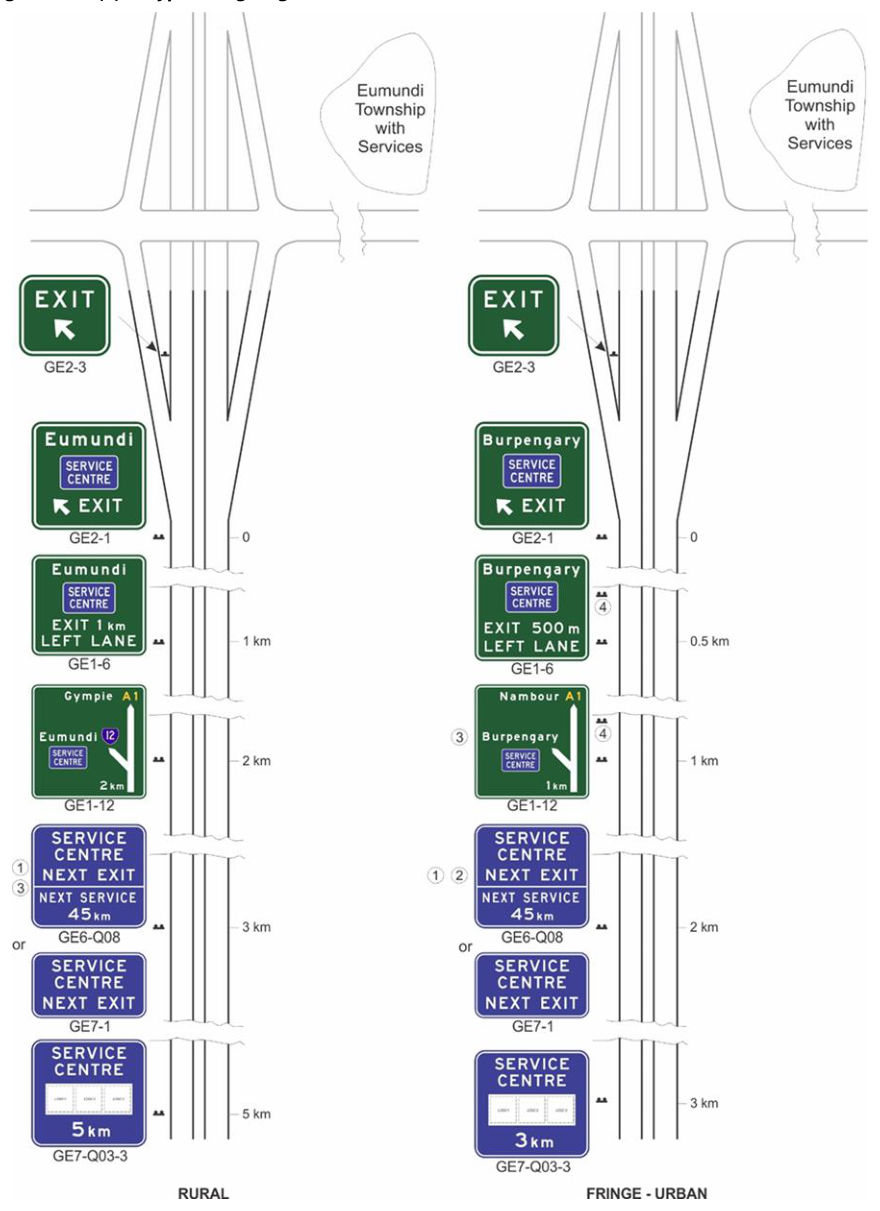
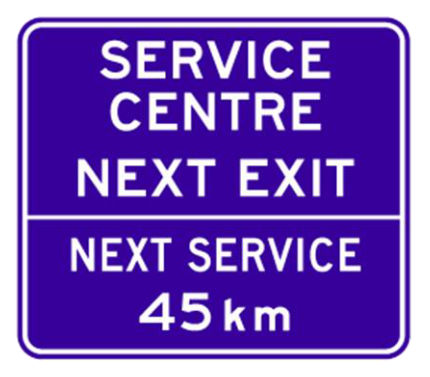
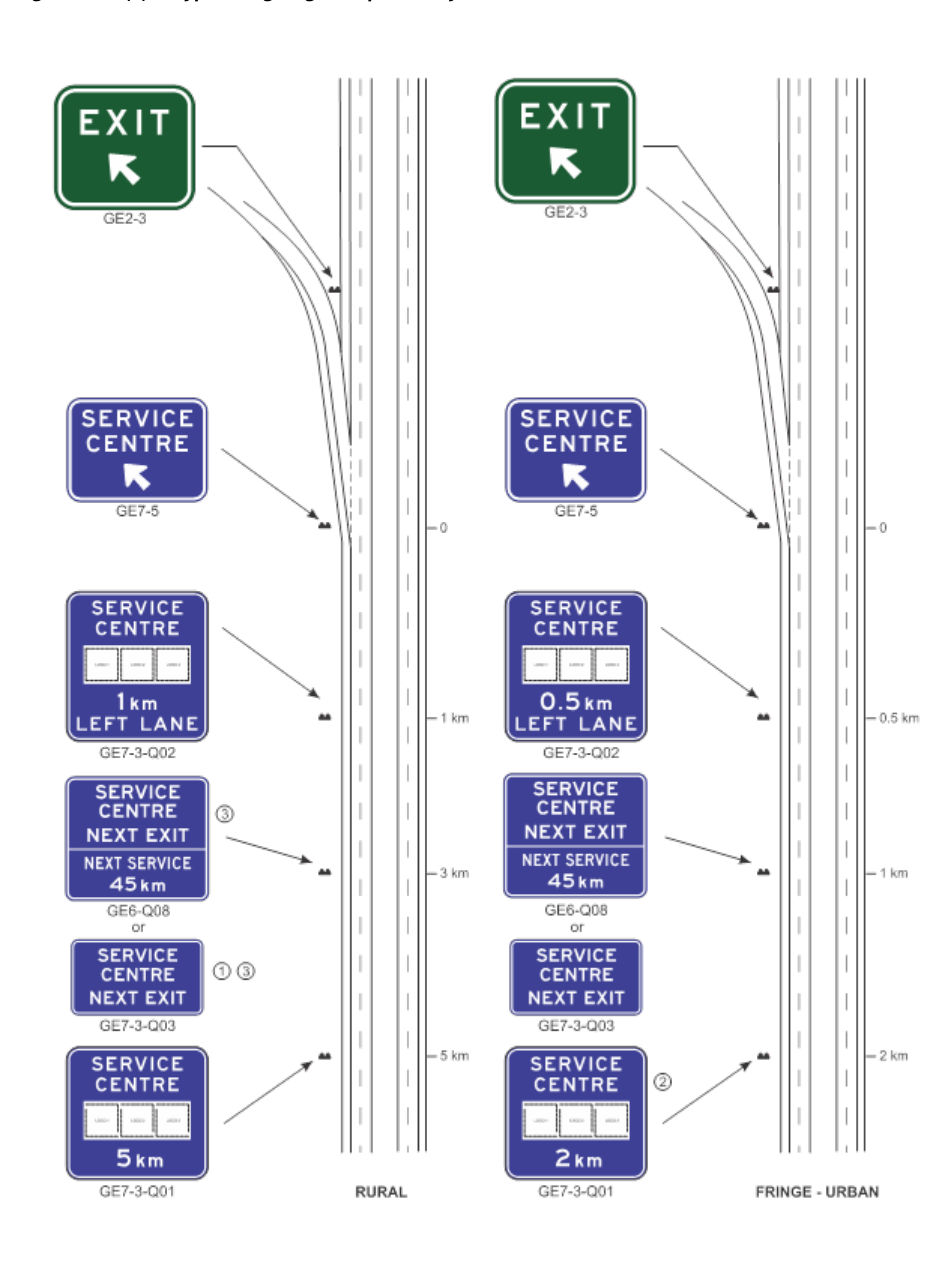
At service centres that are installed in accordance with the Department of Transport and Main Roads Service Centre Policy, extra advance warning may be necessary.
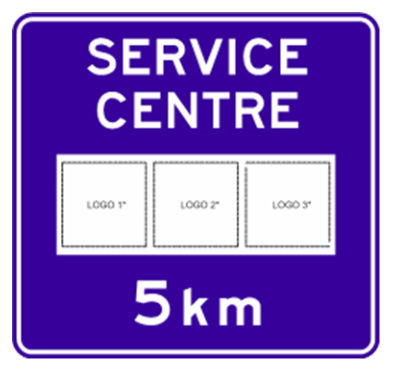
GE7-3-Q01 · GE6-Q08
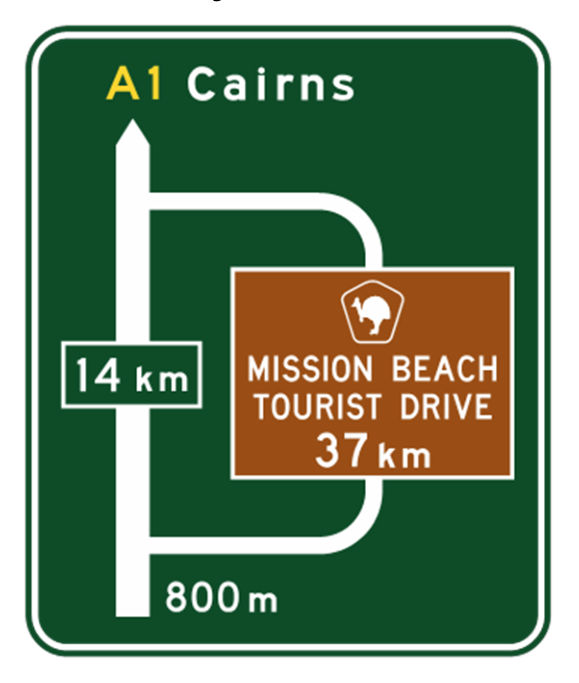
On wide freeways (for example, six and eight lane facilities) with close interchange spacings, additional advance signing can be used in the vicinity of interchange overpasses, or well downstream of on-ramps, to give motorists more time to move to the left of the roadway.
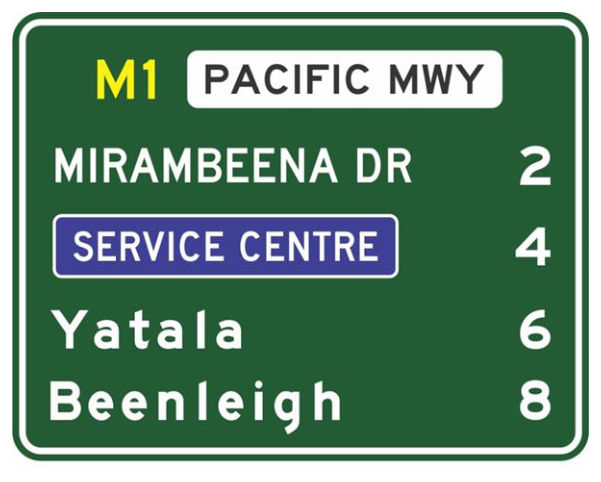
GE4-1-Q01
5.7.3Signing to services off the expressway#
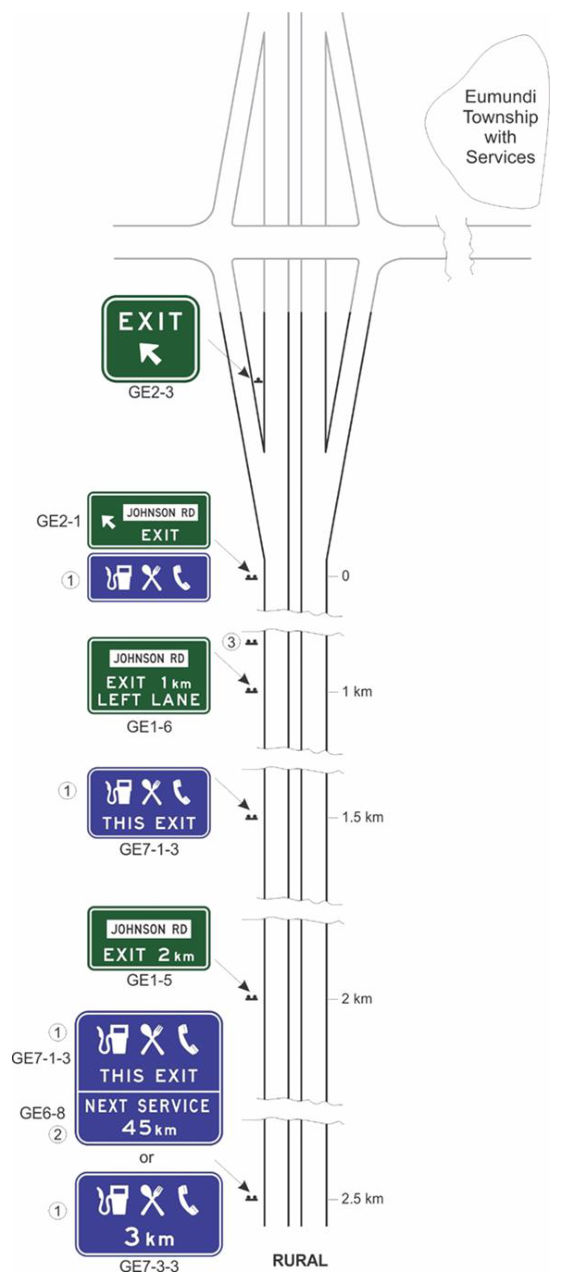
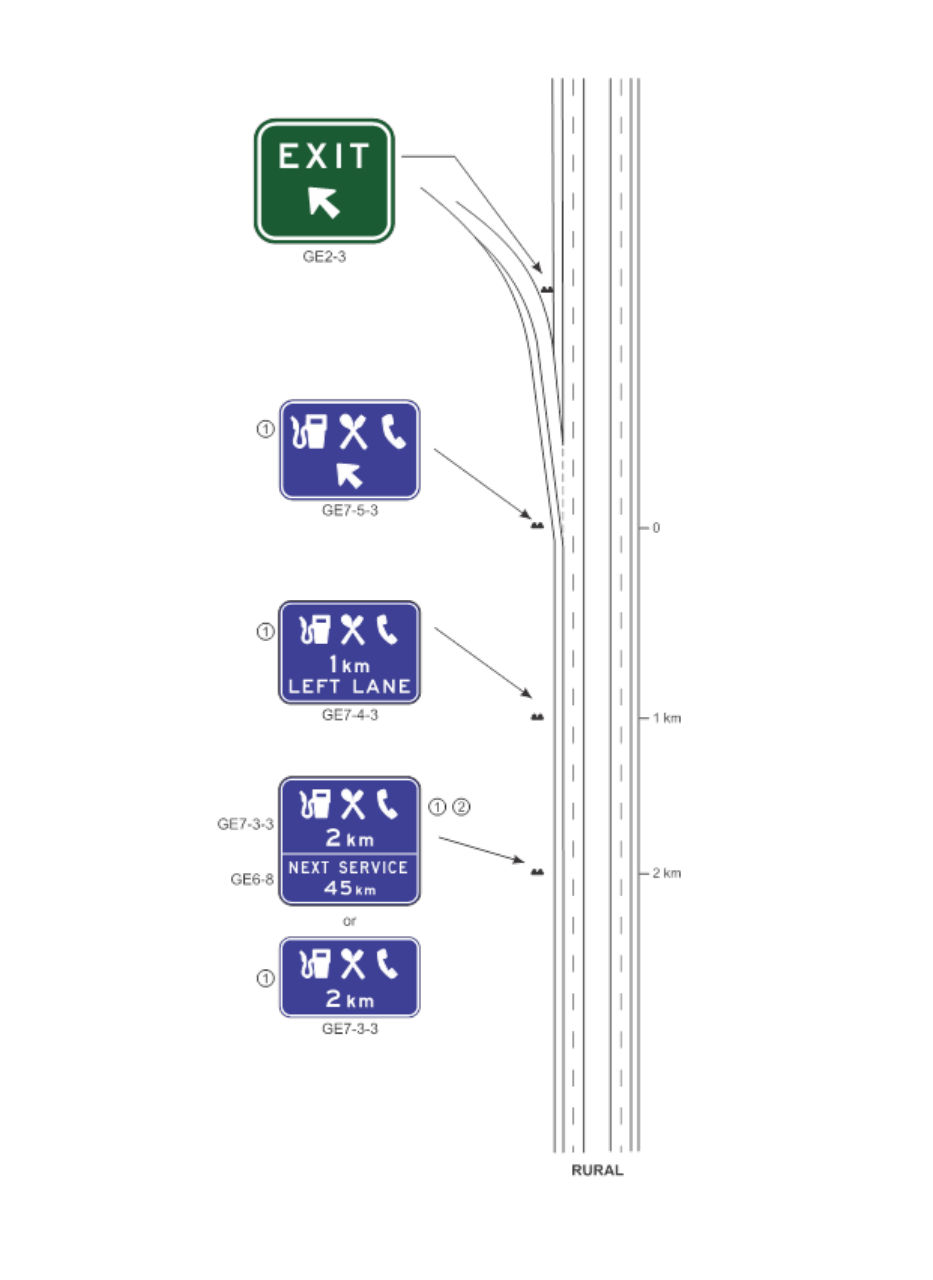
The following figures are in addition to the Standard.