5Interface with other functions, agencies and organisations and responsibilities#
Temporary restrictions on SCRs due to unplanned events interface with other Transport and Main Roads functions, agencies, organisations, and their responsibilities.
5.1Transport and Main Roads disruptive event management team#
The department's Disruptive Event Management Team comprises members from an impacted or potentially-impacted area, such as a departmental District or Region activated to assess a disruptive event, its impacts and emergency response requirements if any.3 Resources and membership can include District Disruptive Event Coordinators, District Disaster Liaison Officers, communication officers and other business units such as RoadTek, depending on the nature of the event.
5.2Transport and Main Roads District Disruptive Event Coordinators#
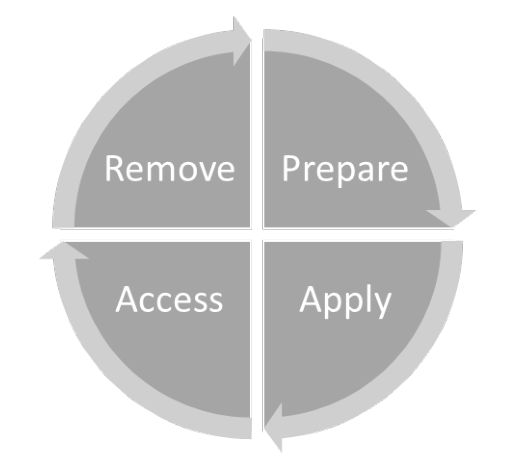
Transport and Main Roads District Disruptive Event Coordinators, are departmental personnel appointed for each Transport and Main Roads District that support the District Director and/or Deputy Regional Director in managing disruptive events within their District's jurisdiction.4 Such personnel may undertake activities to support the prepare, apply, access and remove activities associated with temporary restrictions on a SCR due to an unplanned event.
5.3Transport inspectors#
Transport Inspectors (TI) have the authority5 to undertake enforcement activities associated with temporary restrictions on a SCR due to unplanned events. This may allow the TI to:
- request any operator of any vehicle to stop where they may have, is, or about to drive past enforceable signage, for example, restricted road use notice sign or NO ENTRY sign,6 and/or
- request any operator of any vehicle type to produce their driver licence.7
This can include issuing infringement notices.8
TIs may also provide advice to road users on a range of other matters, including alternative routes or how to apply for permits or approvals to drive past restricted road use notices. In some situations, Tis have authority to apply and remove restrictions on a SCR.9
5.4RoadTek#
RoadTek provides services as part of business as usual, during disaster and under Contract; for example, road maintenance performance Contracts to assist with temporary restrictions on SCRs due to unplanned events such as flooding.
5.5Queensland Police Service#
Queensland Police Service (QPS) has the authority to regulate traffic where they suspect an emergency exists or otherwise necessary, including prohibiting, diverting, or directing traffic and pedestrians.10 This may allow QPS to:
- apply or remove a temporary restriction on a SCR, and/or
- provide access to a temporary restriction on a SCR.
The QPS has authority to undertake enforcement activities associated with temporary restrictions on a SCR. This may allow the QPS to issue an infringement notice,11 or notice to appear12 in relation to the following offences, though not limited to:
- contravening an official traffic sign13
- driving past a restricted road use notice erected or displayed in contravention of the notice14
- unlawfully tampering with a restricted road use notice erected or displayed,15 and/or
- driving past a NO ENTRY sign.16
See also 4.4 Declared Disaster for additional QPS functions and responsibilities during a declared disaster.
5.6Queensland Fire and Emergency Services#
Queensland Fire and Emergency Services (QFES) are the lead agency for fires and other emergencies such as hazardous materials emergency,17 including bushfires.18 The QFES typically liaises with Transport and Main Roads during seasons or events regarding temporary restrictions on SCRs due to unplanned events such as bushfires.
5.7Local government authorities#
Local Government Authorities (LGA) often provide services under Contract, for example, Road Maintenance Performance Contract (RMPC) or Road Asset Maintenance Contract (RAMC), to assist with temporary restrictions on a SCR due to unplanned events. LGAs may also undertake particular functions on a SCR according to powers LGAs exercise for local government roads,19 but are subject to conditions.20 Activities in connection with prepare, apply, access, or remove on local government roads, are matters for LGAs.
5.8Private road / tunnel operators#
Private road and tunnel operators may apply and remove temporary restrictions on roads where those roads are franchised to particular road and tunnel operators only.21
11 See Transport Operations (Road Use Management) Act 1995 (Qld) s 20(1) and State Penalties Enforcement Act 1999 (Qld) s 13(1). 12 Police Powers and Responsibilities Act 2000 (Qld) s 382(2)(a). 13 Transport Operations (Road Use Management) Act 1995 (Qld) s 74(1). 14 Transport Infrastructure Act 1994 (Qld) s 46(4). 15 Transport Infrastructure Act 1994 (Qld) s 46(5). 16 Transport Operations (Road Use Management – Road Rules) Regulation 2009 – Reg 100. 17 Fire and Emergency Services Act 1990 (Qld) s 53(1)(a). 18 Fire and Emergency Services Act 1990 (Qld) s 8B. 19 Transport Infrastructure Act 1994 (Qld) s 45(1). 20 Ibid ss 45(2)-(5). 21 See for example, Transport Infrastructure Act 1994 (Qld) s 46(1) via instrument of delegation from chief executive of Queensland Department of Transport and Main Roads.
5.9Disaster management#
During a declared disaster, the Disaster Coordinator or Declared Disaster Officer has power to close a SCR to any traffic.22 During a declared disaster, the QPS acts as lead agency for traffic management with Transport and Main Roads, providing support to apply, access or remove temporary restrictions on SCRs, along with recovery23 during declared disaster. Transport and Main Roads acts as the lead agency for the roads and transport functional recovery group.24 The department's Transport Network Security and Resilience Branch lead the department's disaster management function.