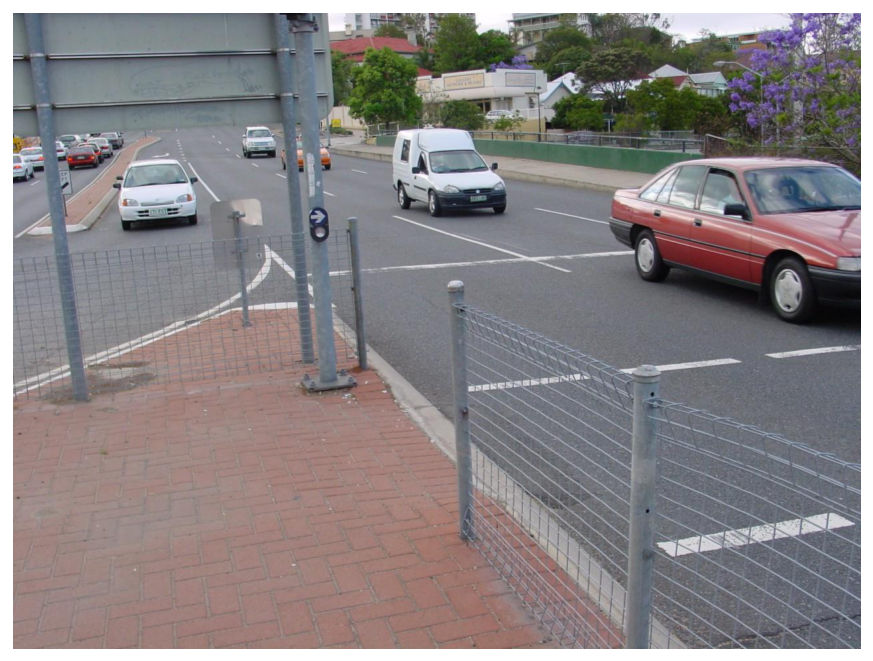
1Use of pedestrian fencing#
Pedestrian fencing might be appropriate in the following circumstances (note that pedestrian fences also provide useful guidance for vision impaired pedestrians):
- areas of heavily concentrated and vulnerable pedestrian traffic (e.g. in the vicinity of exits from schools or sporting facilities)
- at locations where there has been a history of crashes involving pedestrians crossing at inappropriate locations
- to control pedestrian movements on higher speed arterial roads with consistent and substantial pedestrian presence, particularly where alignment discontinuities and speed differentials have been noted.
1.1Placement#
Intervisibility, as well as the physical layout of the fence, is very important and should be major factors in deciding whether pedestrian fences should be installed.
Particular attention should be given to the height and placement of the fence, and to the material used in its construction, in order to minimise the potential sight obstruction between drivers and pedestrians about to cross the road. Improper installation or rehabilitation of pedestrian fences can effectively negate any potential increase in pedestrian protection and can also increase the severity of vehicle accidents.
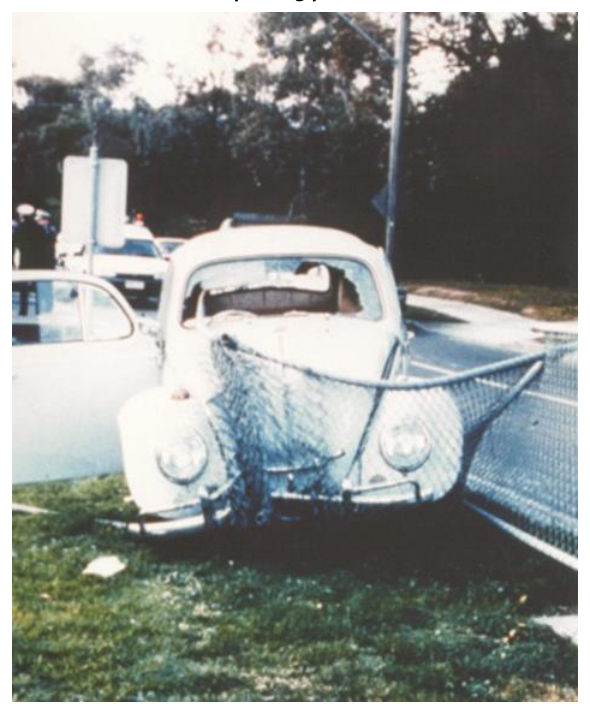
Fencing with rigid horizontal railing, installed near roads, can be a hazard to occupants of errant vehicles. The horizontal rails can easily become detached and spear into the driving compartment.
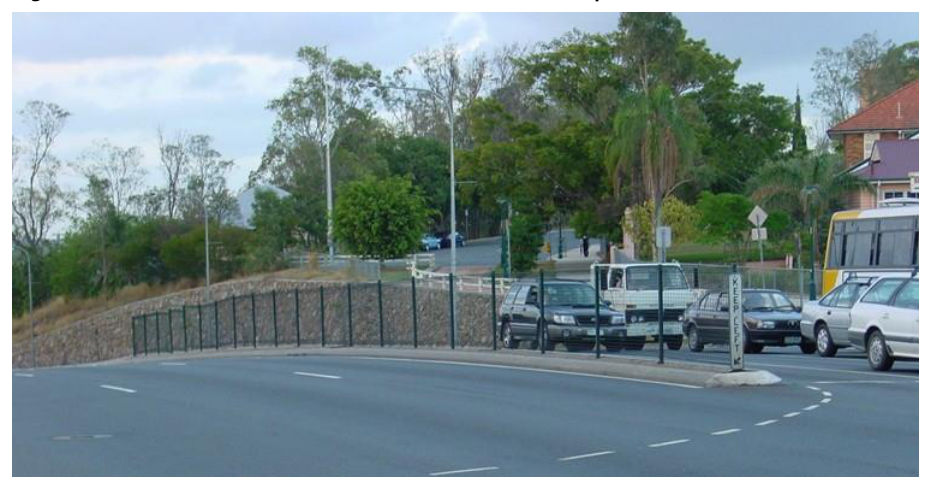
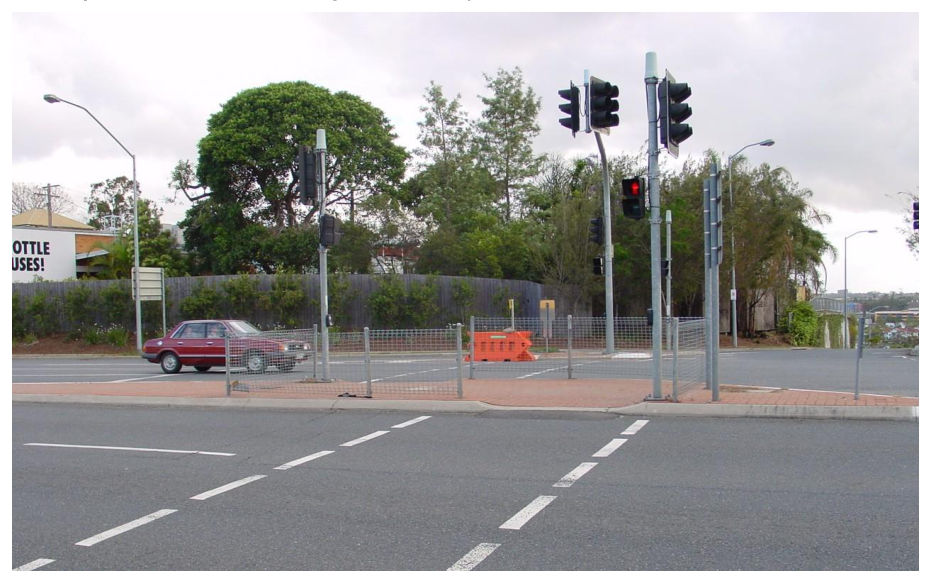
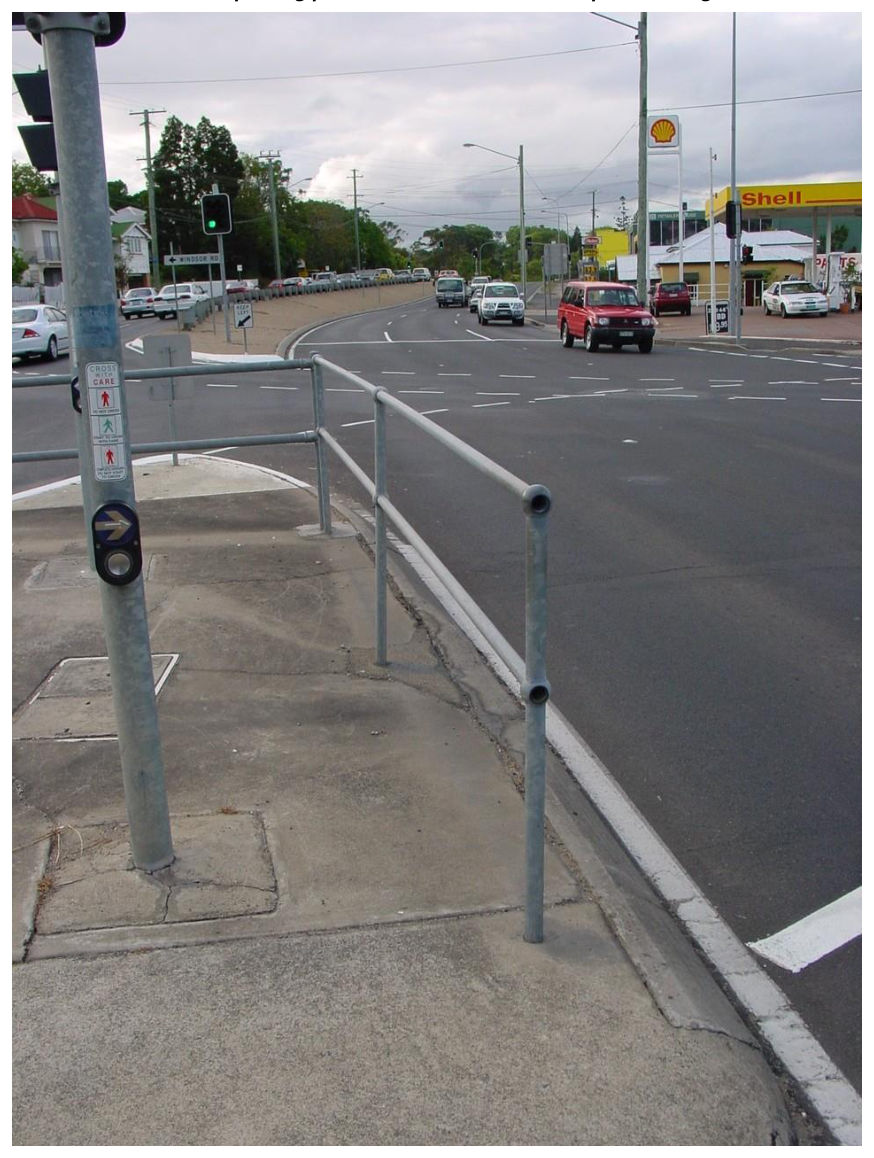
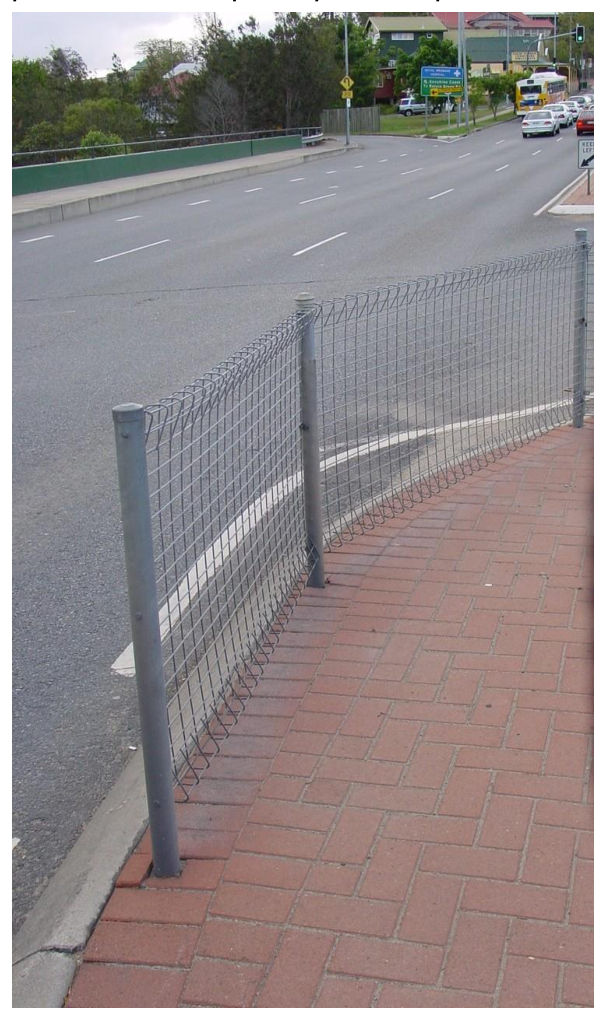
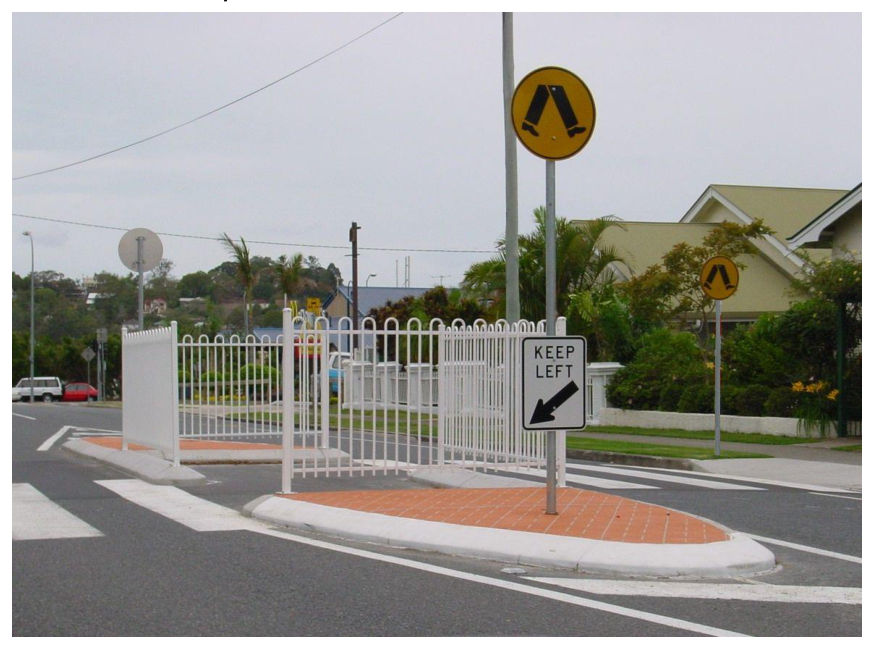
Absence of horizontal rails and good site layout
1.2Installation and materials specification#
Refer to the Galvanised Welded Mesh Fencing – Standard Drawing 1604. Other types of fencing can be used, provided the guiding principles outlined in this technical note are observed.