3.4Information gathering and documentation#
TIMS personnel are required to complete incident reports for all incidents attended. This may include gathering information about the incident, the activities undertaken by the TIMS personnel and any infrastructure damage. Incident attendance reports generally capture information such as the type of incident; risk assessment performed, agencies in attendance and so on.
When completing any report at a traffic incident, the following is required of TIMS personnel:
- attend to traffic management before crash / damage documentation
- avoid interfering with the work of Police and other Emergency Services personnel, except to verify details with the senior officer present
- if the Forensic Crash Unit is at the scene or expected, keep out of the investigation area and do not disturb any item of possible evidence, including debris
- be aware that if the Forensic Crash Unit is in attendance, the incident scene is classed as a crime scene until the Forensic Crash Unit investigation is complete
- do not draw attention to your documentation and photography activity, and preferably wait until persons involved in the crash and other non-official observers have left the scene
- do not photograph (or even show the camera) while injured / deceased persons are at the scene
- avoid photographing people and, under no circumstances, photograph injured or deceased persons.
3.4.1Recording infrastructure damage#
Additional information within incident reports is required when there has been damage to departmental infrastructure and there is a possibility of cost recovery or where Transport and Main Roads could become involved in legal proceedings.
TIMS personnel are not required to carry out or document formal incident investigations; however, they should be aware of the need for accurate incident reporting and preservation of evidence at an incident or crime scene, such as stolen cars involved in incidents.
The most common cause of infrastructure damage is vehicle impact. Other incidents where cost recovery may be possible include chemical spillage, load spillage and fire.
Where infrastructure damage is detected, details of the damage, including photos of involved vehicles, need to be retained and reported back to the TMC / region / district.
3.4.2Recording crash incident details#
An incident report to assist with understanding the circumstances of a crash is required when there is infrastructure damage or there is a possibility that the department, or contractors acting on behalf of the department, may be blamed for the incident (rightly or wrongly).
TIMS personnel are not required to undertake formal accident investigations. In situations where a TIMS officer may also be a qualified investigator, separate reports should be produced in line with formal investigation procedures.
3.4.3Sketching incidents#
Where possible, sketches of incident scenes, clearly marking the location of vehicles involved (with associated registration details), should be made. These sketches are for note recording and for noting infrastructure damage and are not intended for accident investigation purposes.
3.4.3.1Involved vehicles#
‘Unit No. 1’ is the term used for the vehicle that was the original cause of the incident that resulted in damage to infrastructure. It is not necessarily the vehicle that actually caused the damage.
Unit No. 1 is:
- the vehicle nominated or confirmed by Police as Unit No. 1, or
- the single vehicle involved if there is no suggestion of other vehicle involvement. If neither of these is applicable, do not record a Unit No. 1.
Where other vehicles are involved, record all registration numbers.
When compiling the report, do not assign blame to any vehicle or individual, or attempt to define the cause of the incident, except as confirmed by this manual. Record the facts without comment.
3.4.3.2Photographs#
Where possible, photographs should be taken to document damage to infrastructure.
Be discreet when taking photographs. Do not take photographs including members of the public and do not take photographs while injured / deceased persons are at the scene, even if not in the photograph.
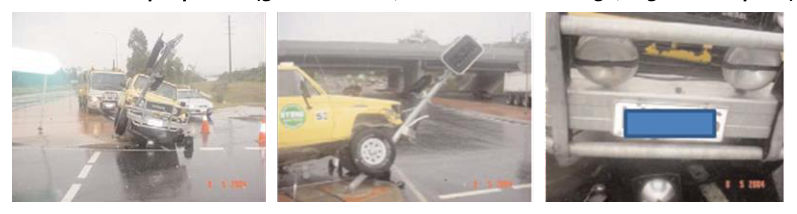
It is advisable to take two shots of each item listed following at slightly different angles, in case light / shade effects obscure detail.
The following photographs should be considered:
- general scene view: an area shot of the incident scene showing the relationship of involved vehicles to the road and infrastructure – wherever possible, include a landmark, sign or other fixture that positively identifies the location
- number plate: a shot of the Unit No. 1 registration plate where Unit No. 1 has been identified
- registration label: taken to identify vehicles with false number plates
- damage: a shot of the infrastructure damage. The shot (or shots) must show the full scope of the damage that can be claimed by the department.
All photographs must be stored in a secure location.