6Cycle Street#
6.1Design specifications#
If the site is appropriate for the implementation of CSs, then there are a number of design issues that need to be considered including:
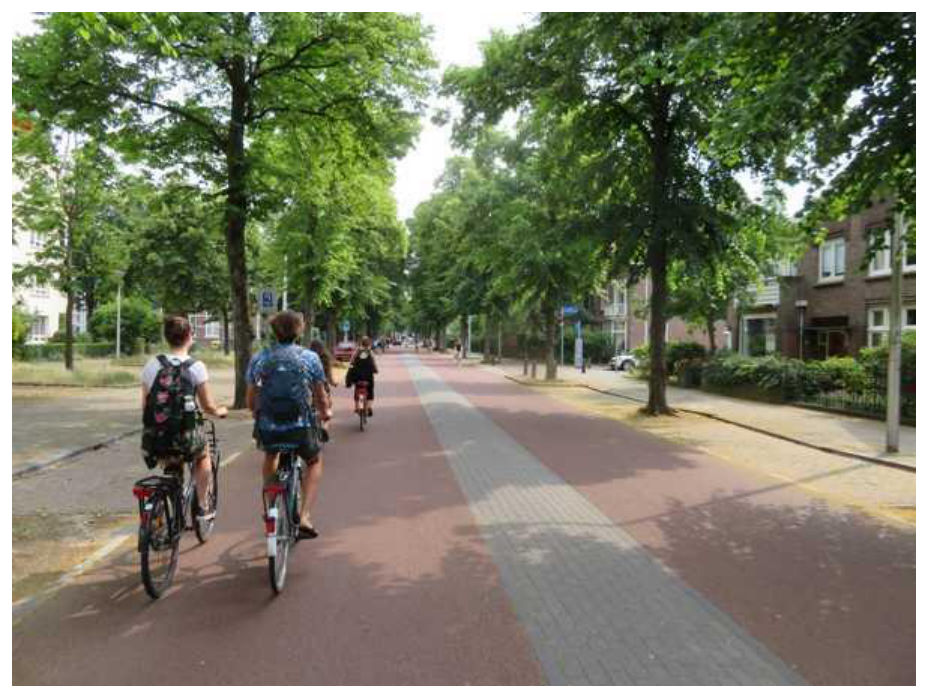
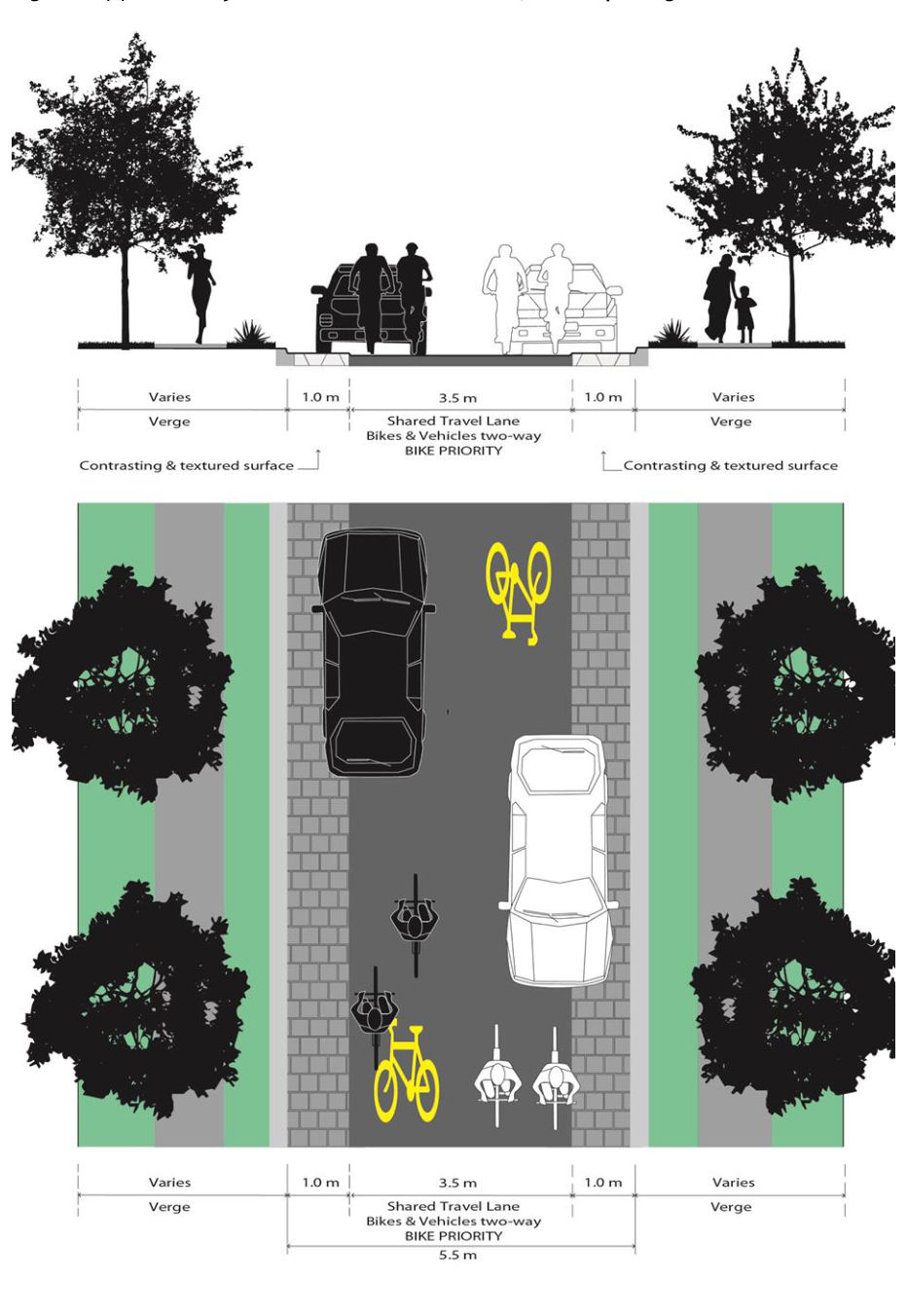
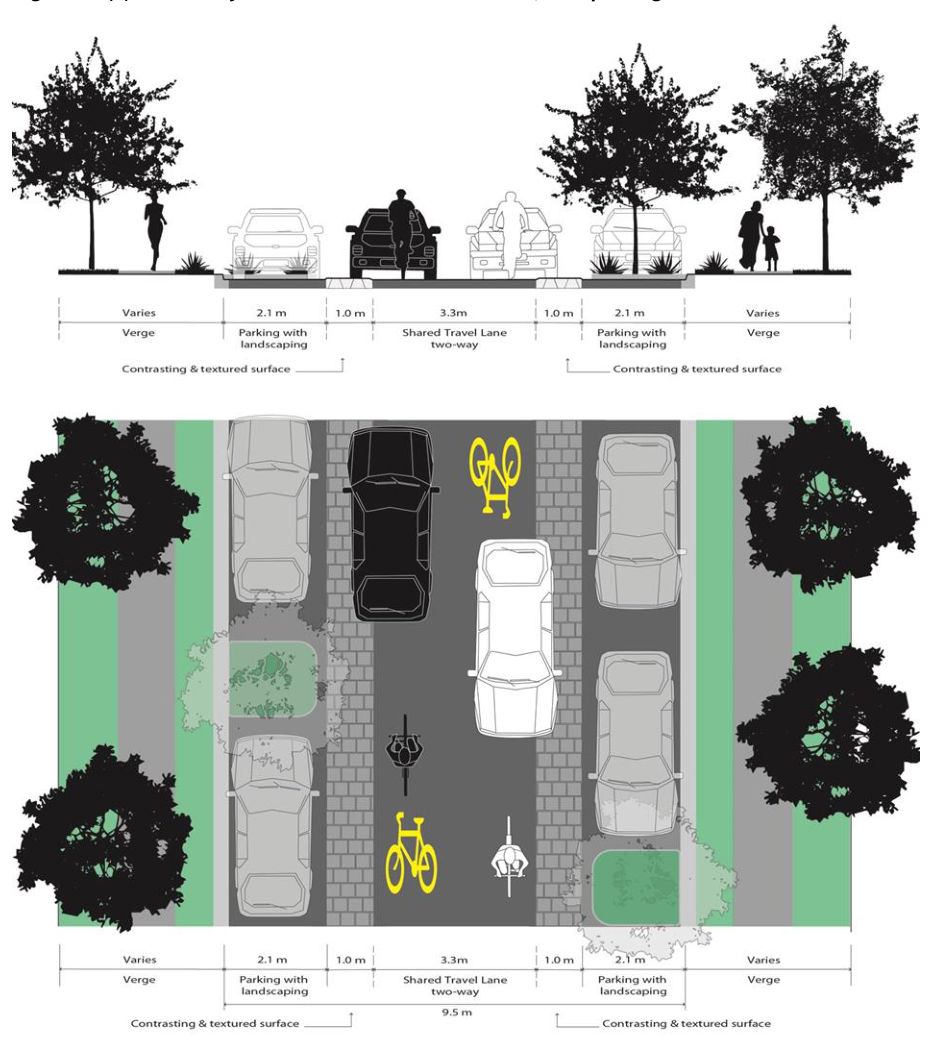
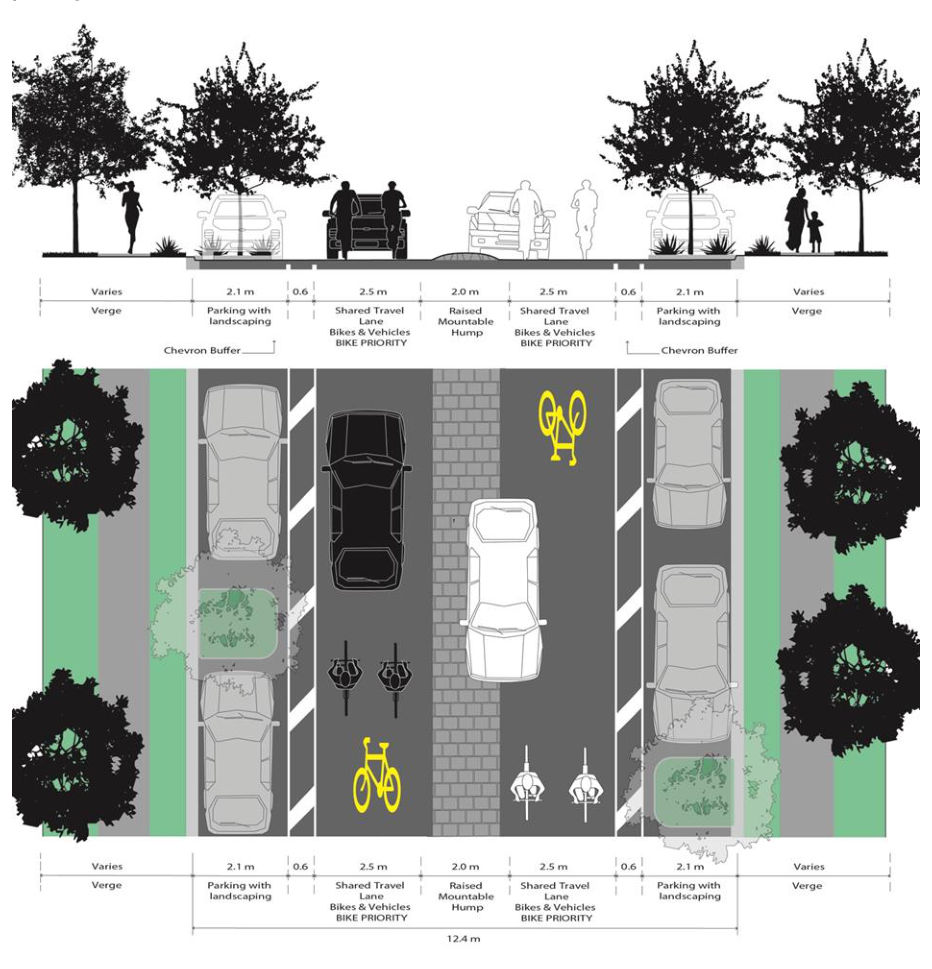
- A shared 3.0 – 3.5 m wide asphalt lane with yellow advisory bike symbols. The bicycle symbol should be located centrally and be line marked in accordance with TRUM Volume 1, Part 10, Section 6.5.1: Bicycle Awareness Zones. Narrow profile encourages safe 'equitable' speed and discourages overtaking of bicycle riders.
- 'Overrun areas' at edges are ≥0.75 m wide constructed with a textured / contrasting surface such as audible tactile line marking every 5 m, cobblestone, stamped asphalt or similar.
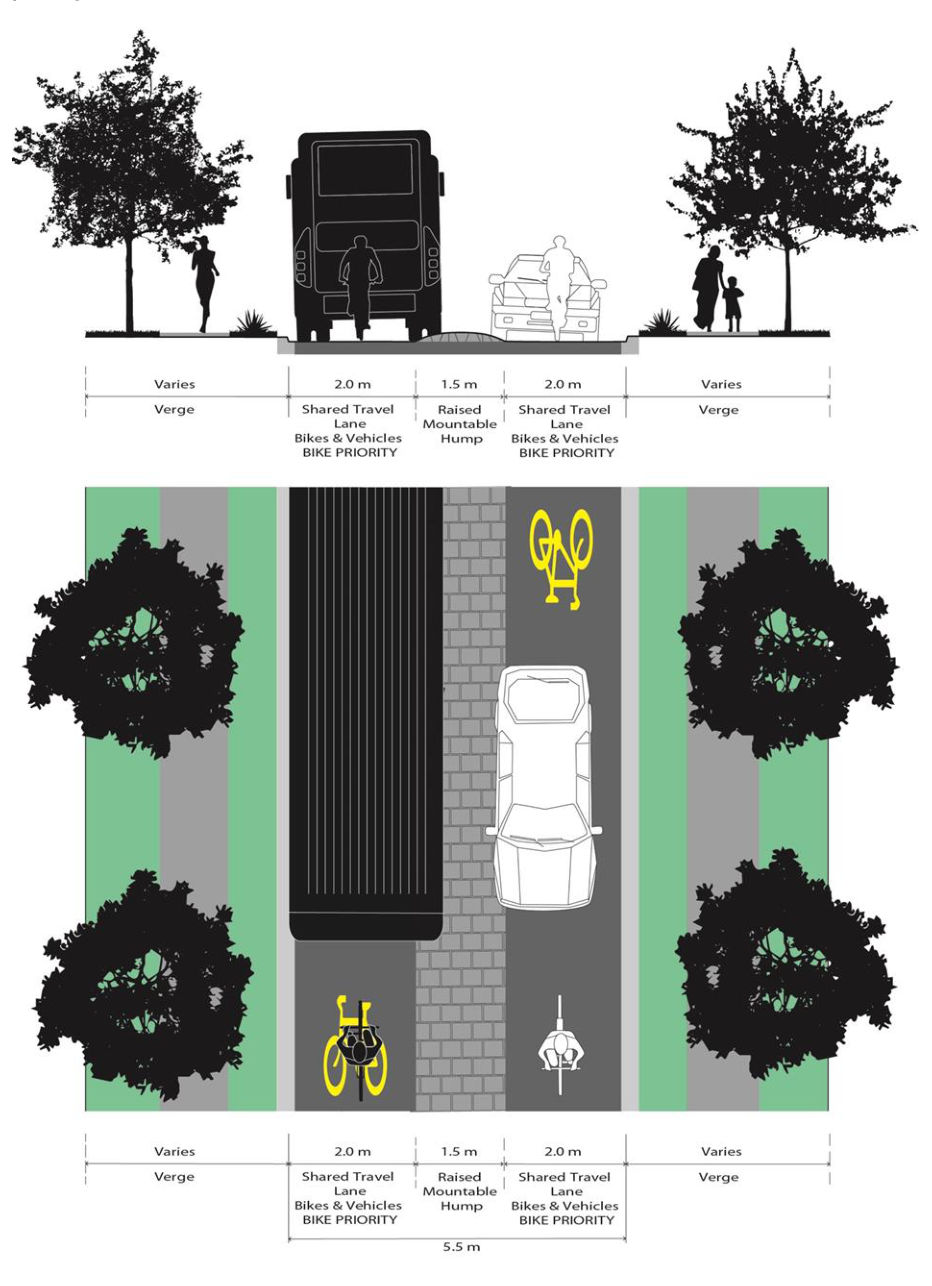
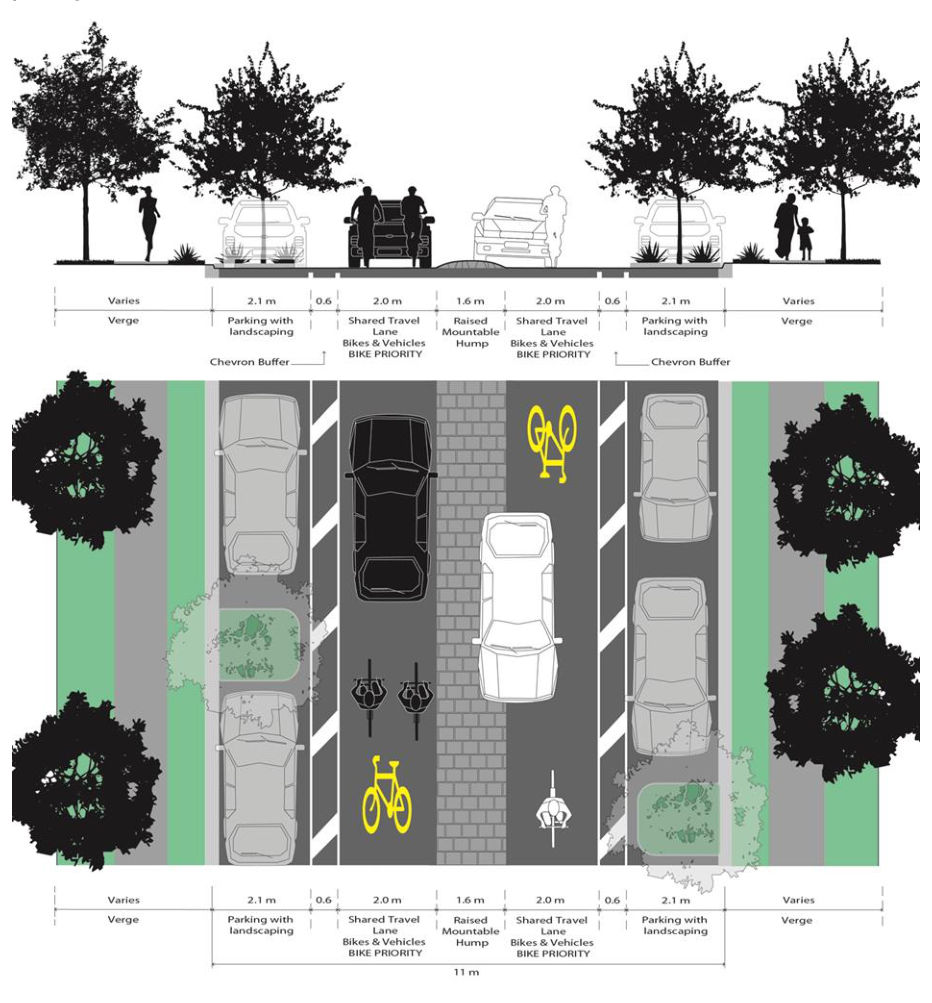
- Variations can be designed for one lane or two lanes with a 1.5 – 2.0 m wide mountable median as shown in Figures 6.1(e), (f) and (g). This treatment type enables implementation of CSs on local access streets with higher traffic volumes up to 3000vd.
- Easy to retrofit, no need to remove parking.
- Designed in conjunction with LATM measures such as road closures, slow points and humps to reinforce low speeds and low volumes of vehicles. Signage by itself is generally not enough to keep speeds down. LATM measures need to be considered on an area wide basis to understand impacts the measures have on surrounding street network, in accordance with Austroads Guide to Traffic Management Part 8: LATM
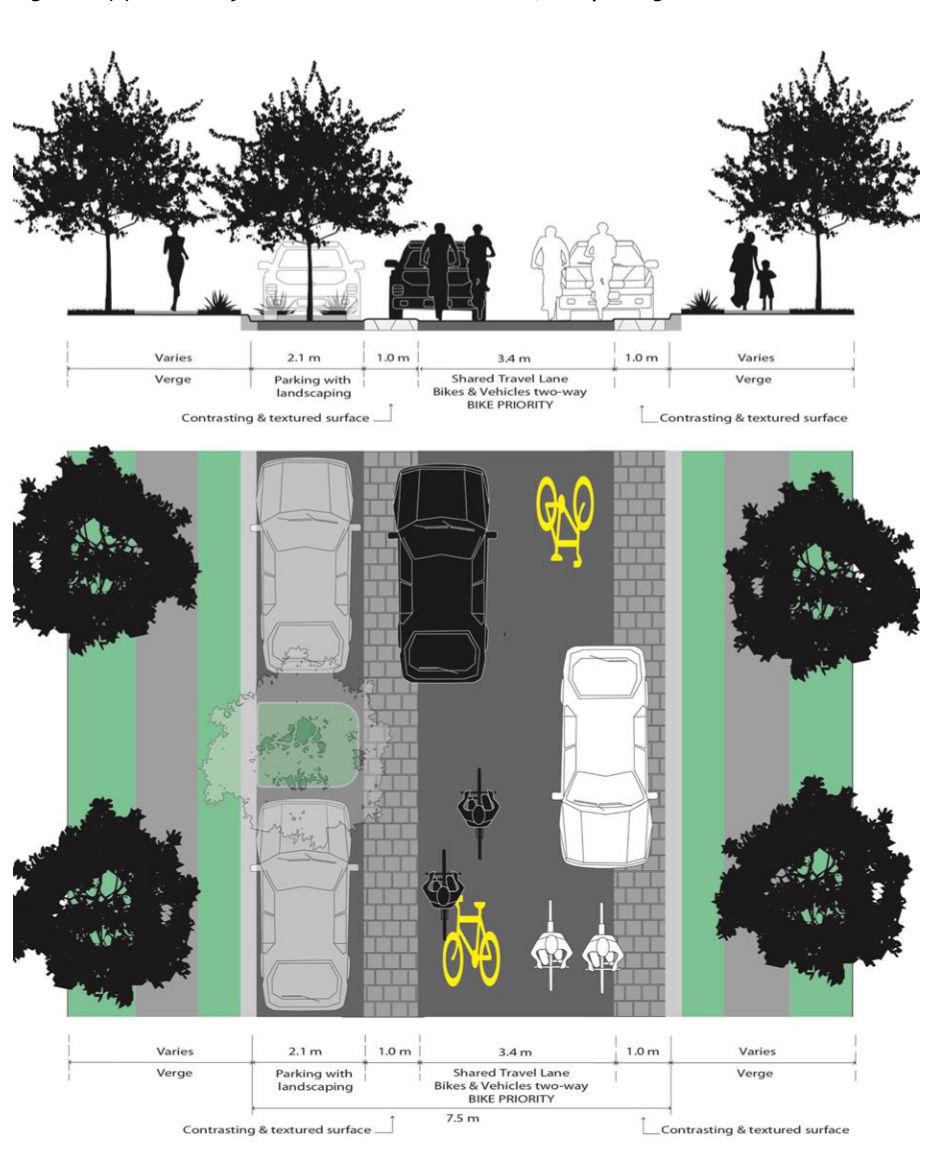
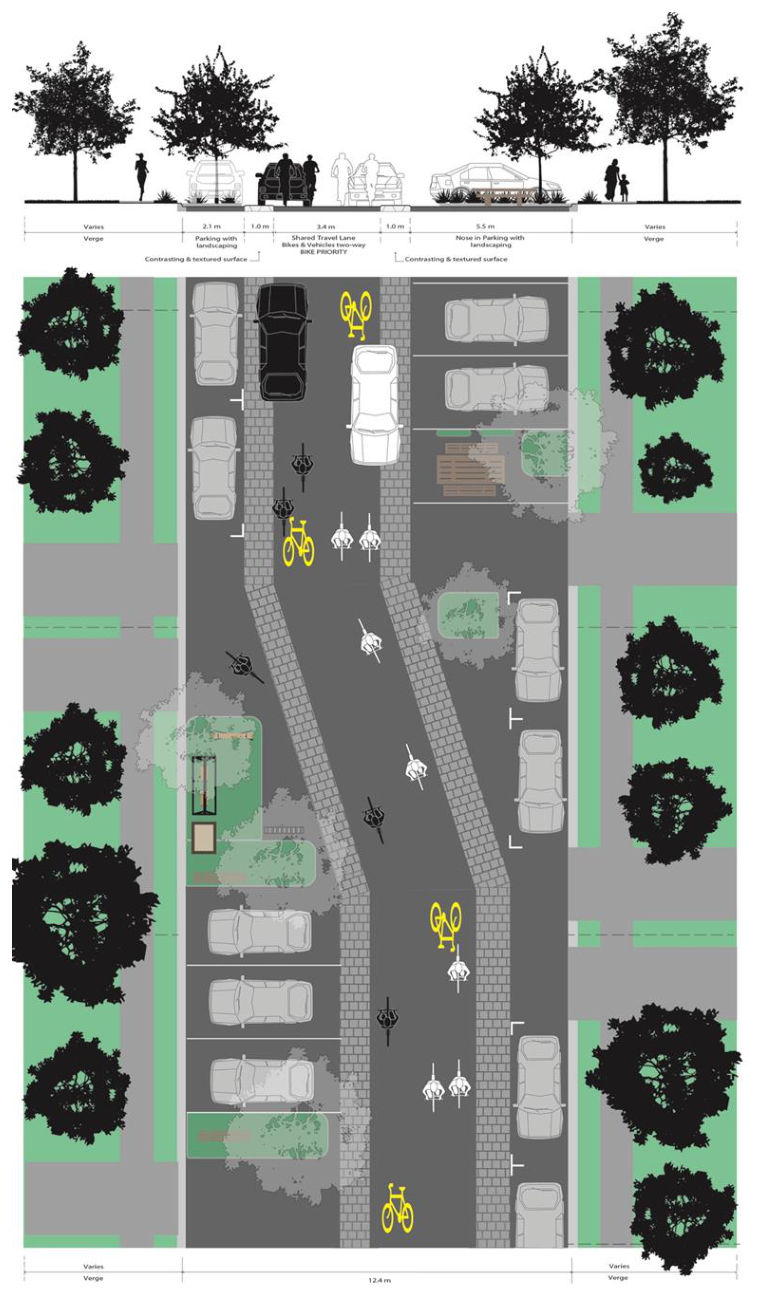
- Clearly designated parking using indented 2.1 m marked parking bays with landscaping placed in line with parking to delineate these areas. Parking can be located one side or both sides. If parking is to be restricted ensure the yellow no stopping line is provided to reinforce behaviour.
The following figures illustrate the cross section options available for CSs. Considerations of preferred facility type against road function, traffic volume and cross section width can be found in Figure 4.2.
6.2Case studies#
6.2.1Shakespeare Street Bike Boulevard, Mount Hawthorn#
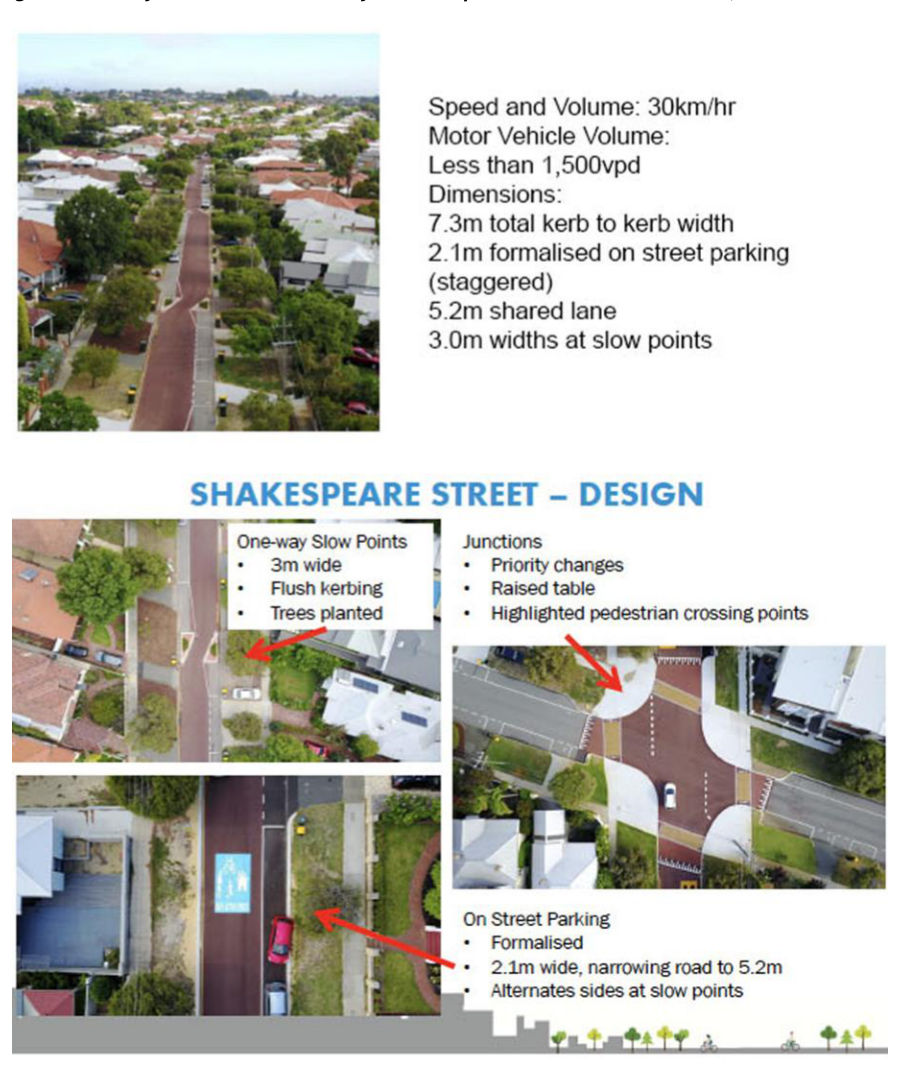
The Western Australian Department of Transport have been trialling Bike Boulevards (also called Safe Active Streets) in a number of locations in Perth, inspired by similar examples in Europe and North America. The bike boulevard (or CSs as discussed in this Section 6) is located on local streets with low traffic volumes and speeds.
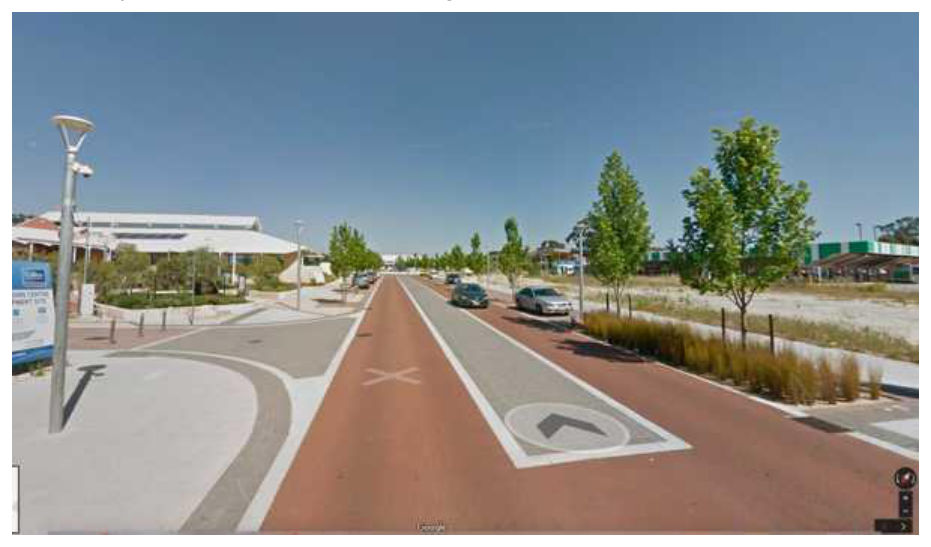
Shakespeare Street in the inner city suburb of Mount Hawthorn connects a major recreation and community hub to schools and the Leederville shopping centre. The route forms part of the Perth Bicycle Network, and connects into existing separated cycle facilities and bike lanes. The project used traffic reduction and calming measures to create attractive, comfortable riding environments in low speed streets so they can be safely shared by cars, bicycles and pedestrians. Another key project aspect included additional tree plantings to provide a shady and cooler street for users, as well as improve its visual appearance.
The project reduced traffic speeds to 30 km/h using one way slow points, priority changes and raised speed tables at intersections, turn bans and reduced lines of sight through horizontal deflection and streetscaping. It also formalised car parking on one side of the road (staggered) and introduced a red asphalt pavement surface. Evaluation of the trial has indicated reductions in 85th percentile speeds and increased pedestrian and bike volumes, including a slight increase in female users.
The Perth treatment is a high quality outcome. It is recognised that lower costs LATM treatments could be used to achieve a similar result.
There are differences in this case study to the design recommendations for Queensland implementation such as red asphalt and no over run area. The Queensland design guidance is based on review of national and international examples.