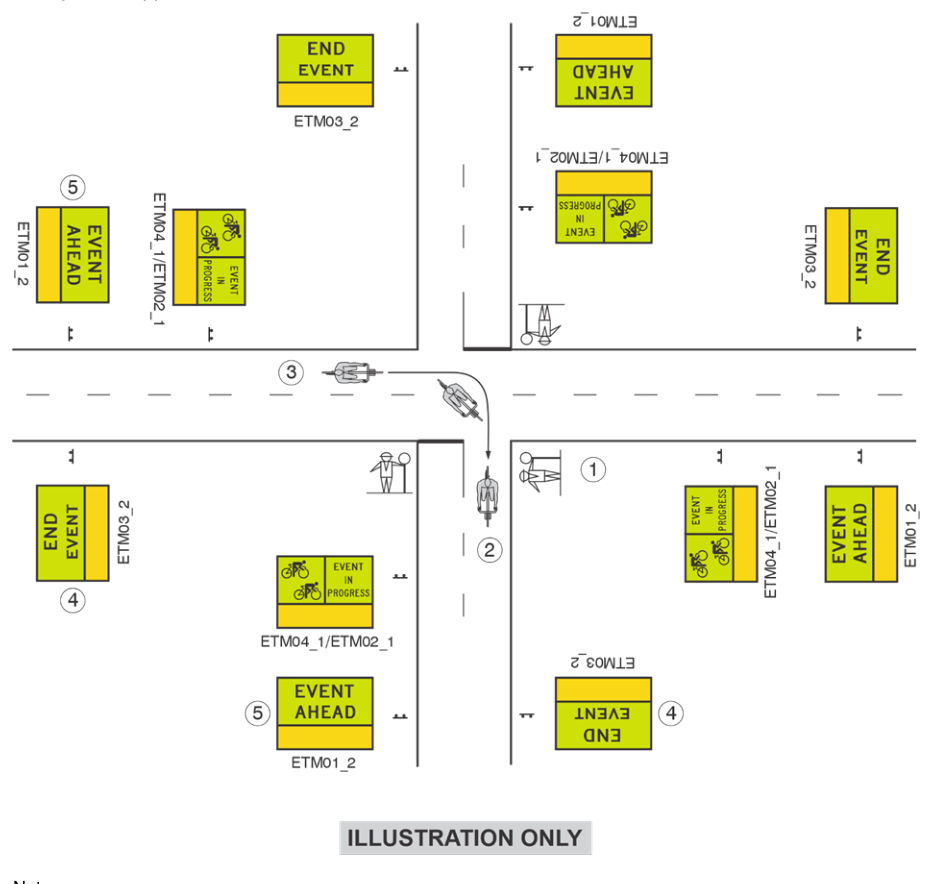
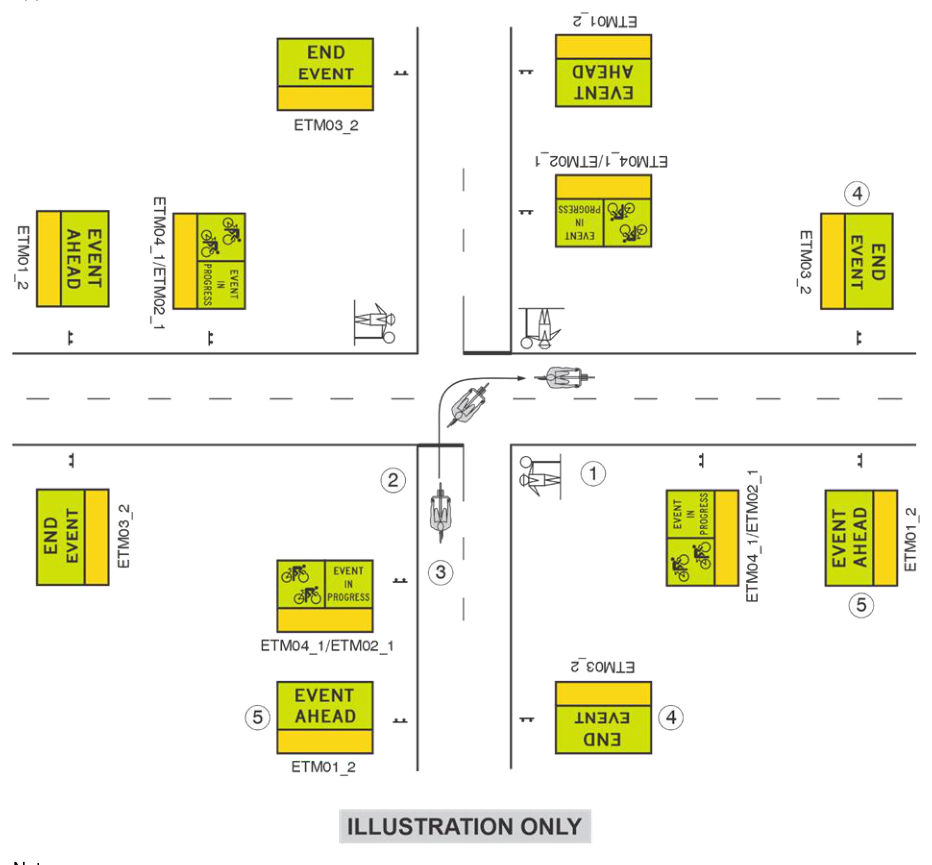
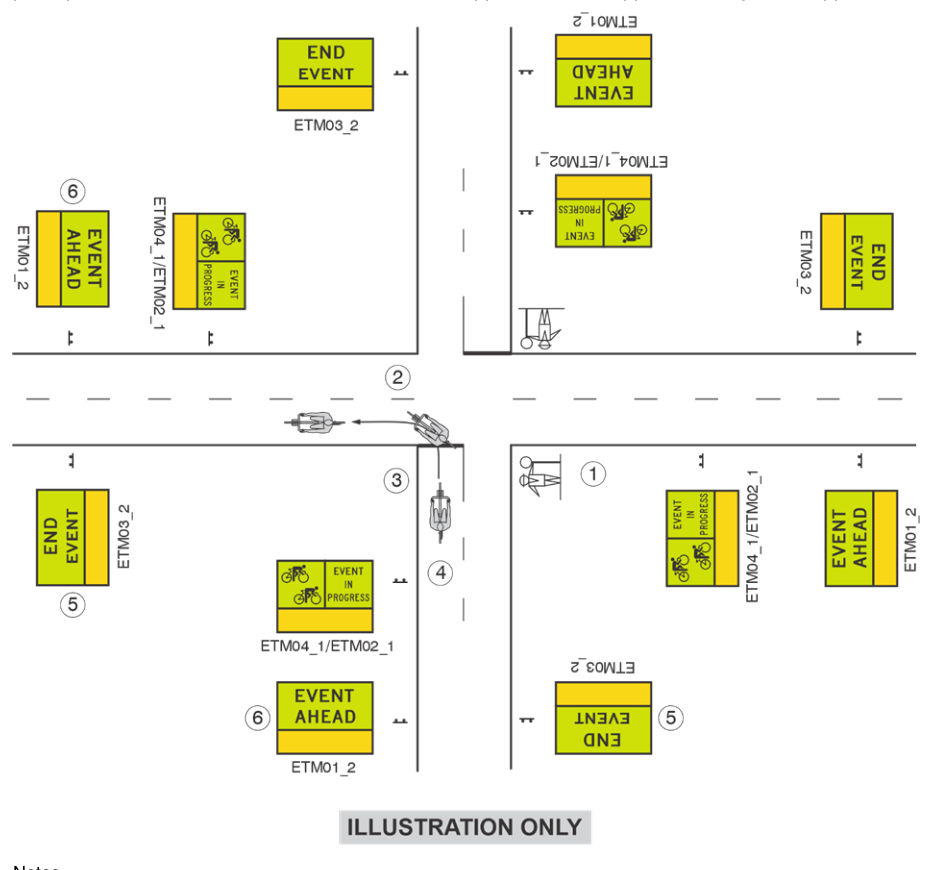
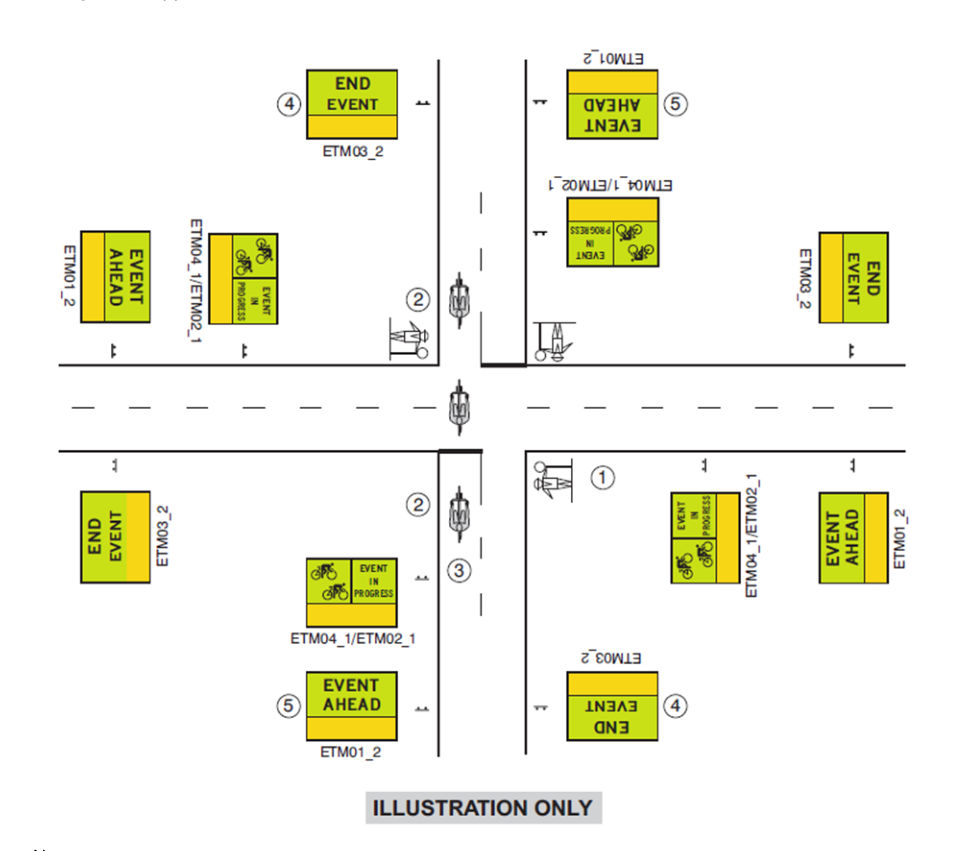
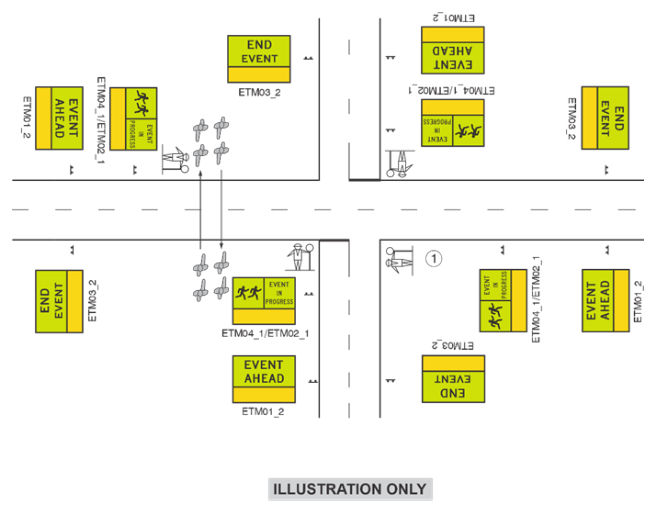
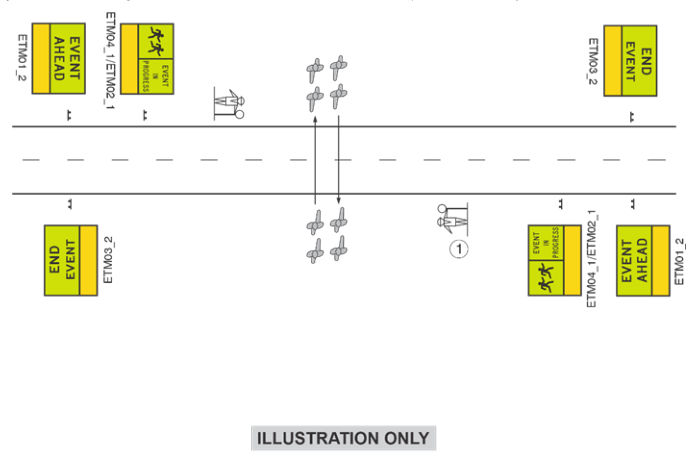
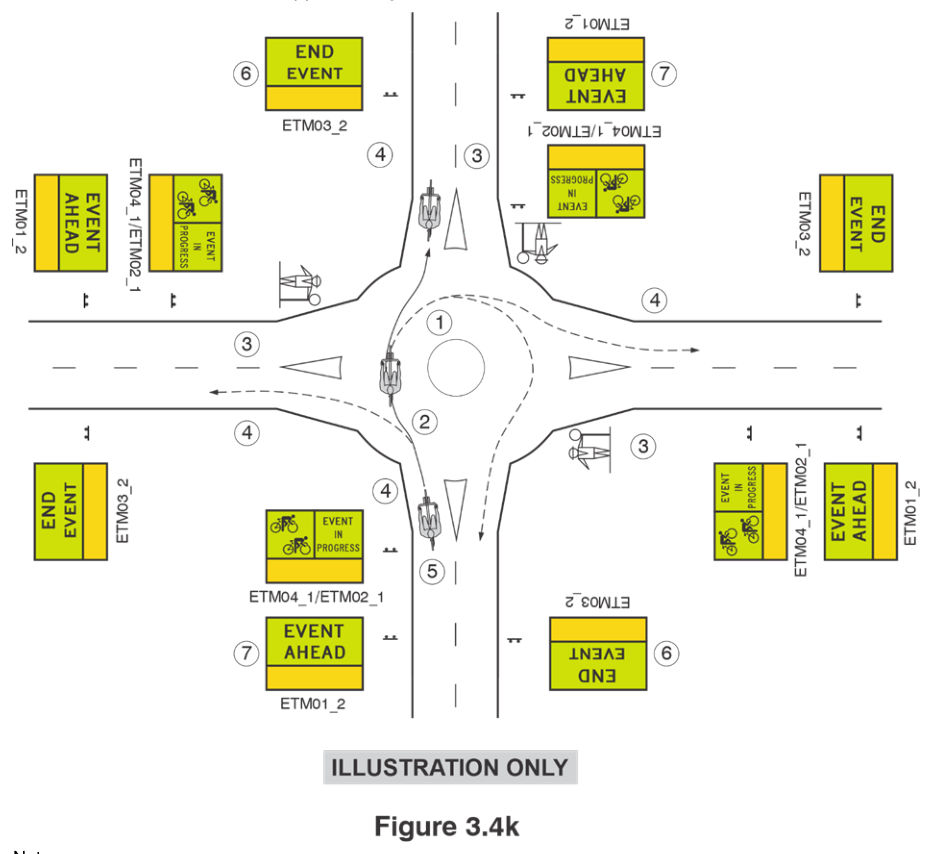
Traffic management may be required at conflict points, especially where a change in priority is required (due to event participants or spectators needing free passage of movement) or where general traffic still has priority and management of event participants is required.Scenarios are presented in the following figures to illustrate the use of advance warning signage and manual control of traffic using traffic controllers and ETMs in the following situations:
unsignalised intersection (four-way)
roundabout (four-way)
pedestrian / cyclist crossings (mid-block and intersection), and
through road (two-way).
When considering these scenarios, it is important to note that:
the figures are illustrative only and a TGS showing the traffic control devices required and spacing / set-out arrangements must be designed for the site-specific situation by a TMD – examples of how to integrate other Queensland MUTCD traffic signs into these illustrations are provided in Appendix A
requirements relating to the use of traffic controllers can be found in the QGTTM Part 7 and the Traffic Controller Accreditation Scheme Approved Procedure (TCASAP)
requirements relating to the use of ETMs can be found in this ETMDG and the Events Traffic Marshal – Special Events Approved Procedure
requirements relating to the signing of detours can be found in the QGTTM
general traffic may need to be restricted along the event route and/or
participants may be required to travel in a convoy or follow special instructions for participating in the event (including the road rules).
Figure 3.4(a) – Unsignalised intersection: right turn from through roadp. 38
Event participants turning right from a through road onto a side road where it is desired to provide priority to the event participants and ensure that vehicles do not attempt to turn from the side roads while event participants are present.Use of traffic control to hold side road approaches and opposing through road approach.
Figure 3 4(b) – Unsignalised intersection: right turn from side roadp. 39
Event participants turning right from a side road onto a through road where it is desired to provide priority to the event participants and prevent minor road vehicles from attempting to turn between gaps in event participants.Use of traffic control to hold side road approach and opposite through road approach.
Figure 3.4(c) – Unsignalised intersection: left turn from side roadp. 40
Event participants turning left from side road onto a through road where it is desired to provide priority to the event participants and prevent side road vehicles from attempting to turn between gaps in event participants.Use of traffic control to hold side road approaches and opposite through road approach.
Figure 3.4(d) – Unsignalised intersection: through from side roadp. 41
Event participants travelling straight from side road across a through road where it is desired to provide priority to the event participants and prevent minor road vehicles from attempting to turn between gaps in event participants.Use of traffic control to hold side road approaches and opposite through road approach.
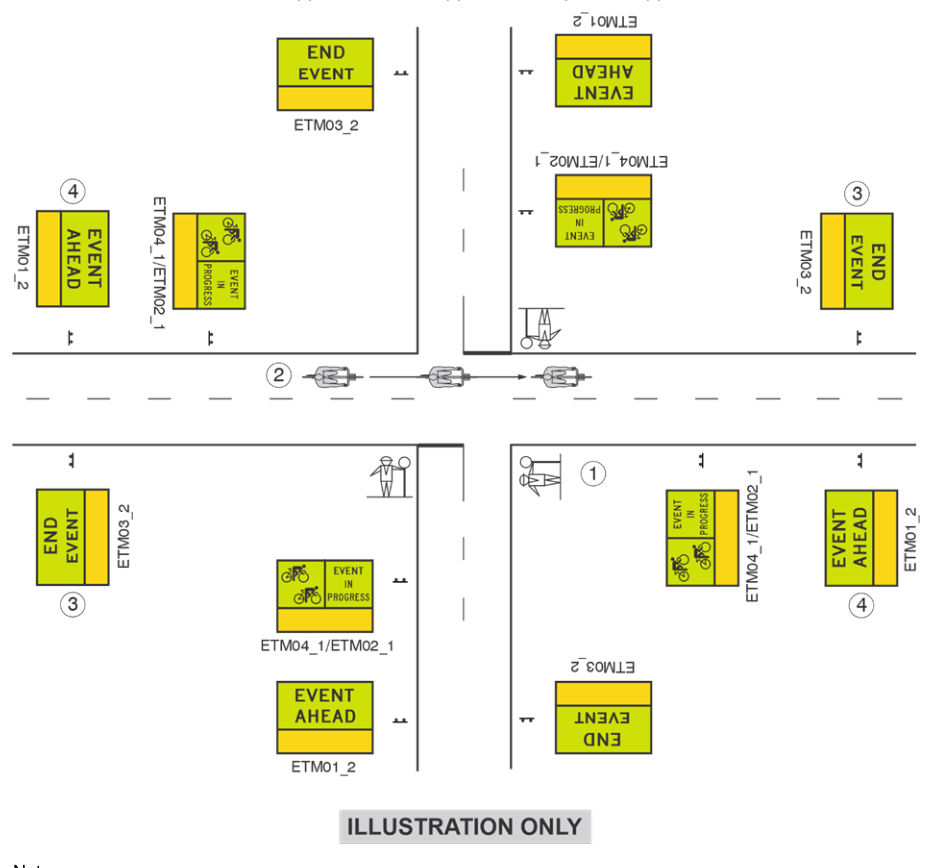
Figure 3.4(e) – Unsignalised intersection: through from through roadp. 42
Event participants travelling along a through road past a side road where it is desired to prevent opposing right-turn vehicles and side road vehicles from turning in front of event participants. · Use of traffic control to hold side road approaches and opposite through road approach.
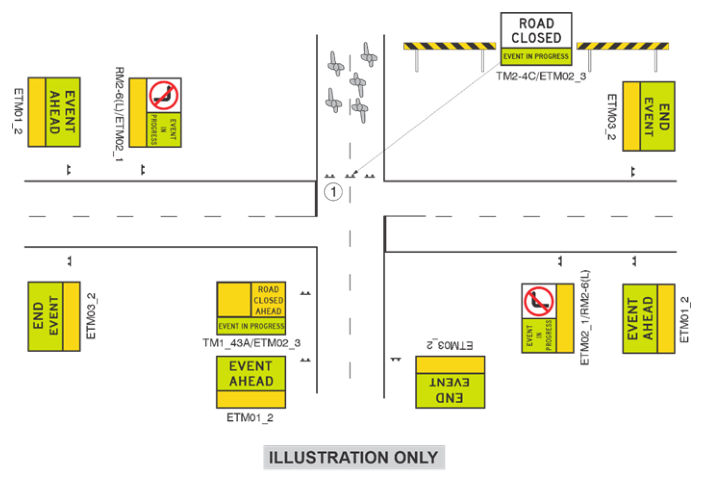
Figure 3.4(f) – Unsignalised intersection: through road closedp. 43
Through road closed at an intersection.
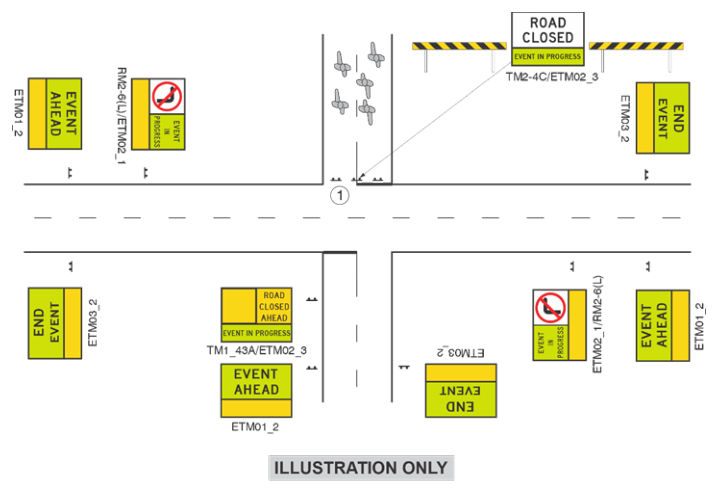
Figure 3.4(g) – Unsignalised intersection: side road closedp. 43
Side road closed at an intersection.
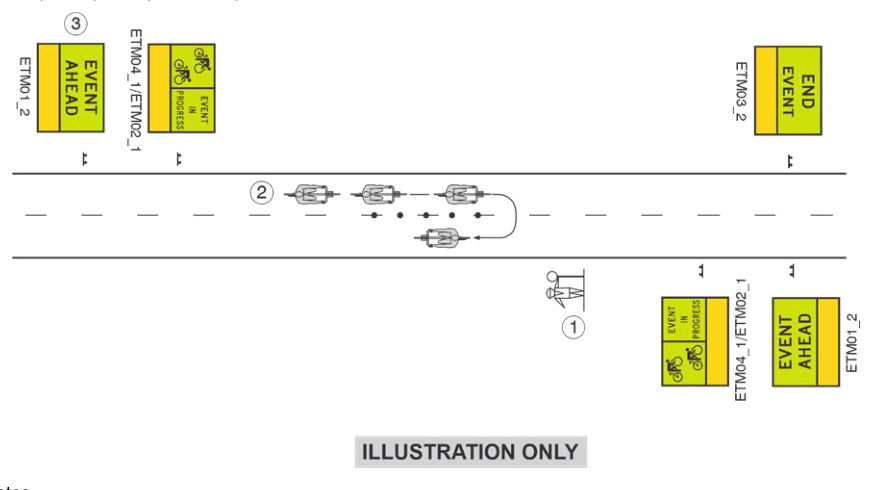
Figure 3.4(h) – Through road: U-turnp. 44
Event participants performing a U-turn at a mid-block location.
Figure 3.4(i) – Pedestrian / cyclist crossing facility: close to intersectionp. 45
Event participants crossing the through road in close proximity to an intersection.
Event participants crossing a road at a mid-block location (that is, away from an intersection).
Figure 3.4(k) – Roundabout: right turn, left turn, through or U-turnp. 46
Event participants turning right, left, travelling through or performing a U-turn at a roundabout. · Use of traffic control to hold the other approach legs to the roundabout.