4.8.1Intersections within the advance warning area#
New
Where intersections exist within the advance warning area (between the traffic control station and the ROADWORK AHEAD or VMS sign), the following warning sign arrangements must apply.
Where the intersection is located between:
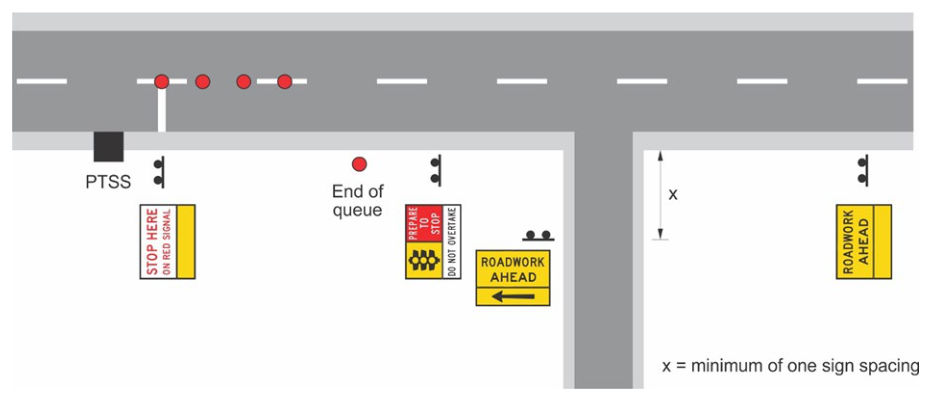
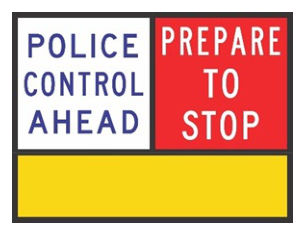
- i.the primary PREPARE TO STOP sign and the ROADWORK AHEAD sign or VMS, an additional ROADWORK AHEAD sign or VMS must be located on the side road and should be a minimum distance of a single sign spacing from the intersection (see Figure 4.8.1(a))
- ii.the predicted end-of-queue location and the primary PREPARE TO STOP sign, either:
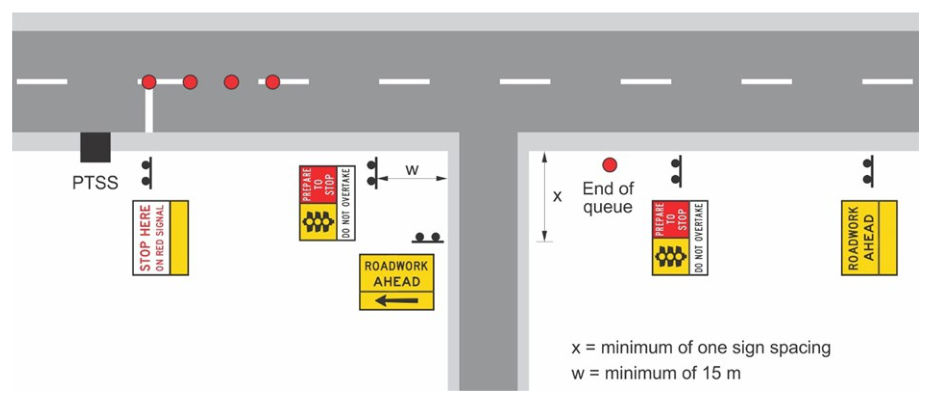
- a)an additional primary PREPARE TO STOP sign must be located on the side road and should be a minimum of a single sign spacing from the intersection and a ROADWORK AHEAD sign, or VMS must be positioned in advance of this sign and should be located a minimum of a single sign spacing further down the side road (see Figure 4.8.1(b)), or
- b)an additional PREPARE TO STOP sign must be provided as a repeater on the through road and should be located a minimum of 15 m along the through road after turning from the side road, travelling towards the traffic control station, and a ROADWORK AHEAD sign or VMS must be located down the side road and should be a minimum of a single sign spacing from the intersection (similar to Figure 4.8.1(c), but with the end of queue located after turning from the side road towards the traffic control station).
- iii.the traffic control station and the predicted end-of-queue location, either:
- a)an additional primary PREPARE TO STOP sign must be located on the side road and should be a minimum of a single sign spacing from the intersection, and a ROADWORK AHEAD sign or VMS must be positioned in advance of this additional PREPARE TO STOP sign and should be located a minimum of a single sign spacing further down the side road (similar to Figure 4.8.1(b), but with the queue extending past the side road) or
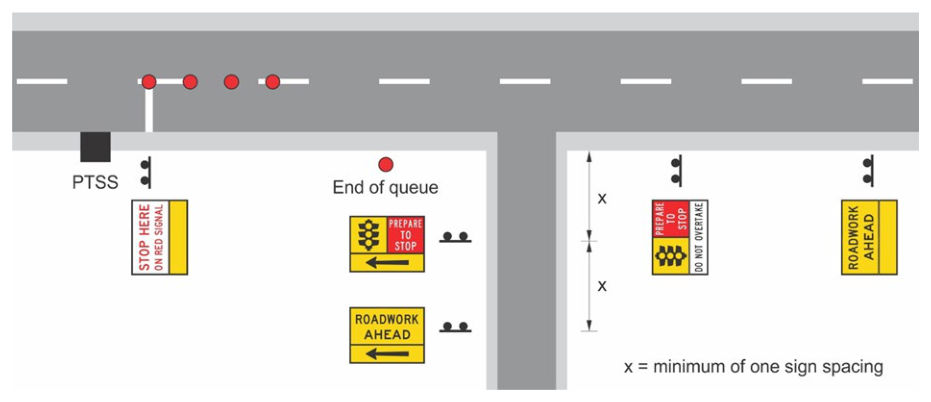
- b)an additional PREPARE TO STOP sign must be provided as a repeater on the through road and should be located a minimum of 15 m along the through road after turning from the side road, travelling towards the traffic control station, and a ROADWORK AHEAD sign or VMS must be located on the side road and should be a minimum of a single sign spacing from the intersection (see Figure 4.8.1(c)).
In determining the sign requirements and effects on the side road, the Designer should also consider the speed of traffic on the side road approaching the intersection, the likely queue lengths on the side road and speed limits on the through road with the following to apply:
- i.if approach speeds on the side road are high, and/or the queue lengths on the side road are long, consider reducing the speed limit on the side road
- ii.if traffic queues are likely to form on the side road, then sign spacings down the side road will need to be greater than those noted previously and additional signs may be required
- iii.if side road speed limits are greater than 60 km/h, consider installing a repeater speed limit sign on the through road just after the intersection for traffic entering the through road from the side road – a repeater speed limit sign may be required for both directions of travel
- iv.if the speed limit on the through road (prior to any reductions for the works) is greater than 60 km/h and is reduced prior to the side road, a repeater speed limit sign on the through road just after the intersection for traffic entering from the side road must be installed – a repeater speed limit sign must be installed for both directions of travel, and
- v.the first sign spacing on the through road (for a repeater PREPARE TO STOP sign or speed limit sign for traffic turning onto the through road) may be located a minimum of 15 m from the intersection (as turning speeds from the side road will be low); however, all signs on the through road will also need to meet the minimum sign spacing requirements in Table 2.2 for the through road traffic speeds.
The following Figures (4.8.1(a), 4.8.1(b) and 4.8.1(c)) do not include all traffic control devices required and are not to be used as TGS diagrams.