A.3Closing a road#
Section A.2 is specific to state-controlled roads only, however there are a few signing options for the temporary closure of any road (including a state-controlled road). A key difference in the signing options is whether and how the temporary road closure is to be enforced.
In practice, while the ROAD CLOSED message may be enforced using the contravention of an official traffic sign as an offence provision in Section 74 of the Transport Operations (Road Use Management) Act 1995, this is a complicated process with a court appearance as a requirement and is not the preferred method of enforcement of a ROAD CLOSED message.
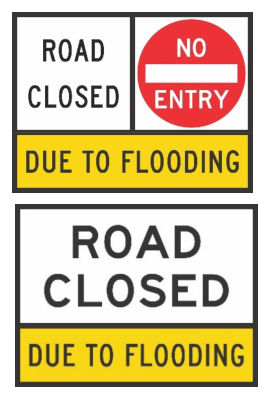
The preferred method of enforcing a ROAD CLOSED message is to install a NO ENTRY regulatory sign with this arrangement and enforce the NO ENTRY sign in accordance with the provisions of Section 100 of the Transport Operations (Road Use Management—Road Rules) Regulation 2009.
A NO ENTRY sign is enforceable without the need for other supporting signage when closing a road, however the supporting signs should be used wherever possible.
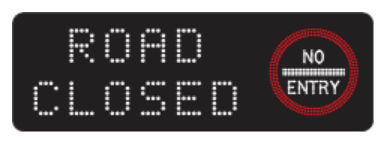
A range of exceptions apply for a road user to drive past a NO ENTRY SIGN and typically are reserved for drivers of police vehicles and drivers of emergency vehicles or transport inspectors (inspecting the road for damage). Other exemptions for a road user to drive past a NO ENTRY SIGN may be applied through the inclusion of an EXCEPTED message on a sign with the NO ENTRY sign.
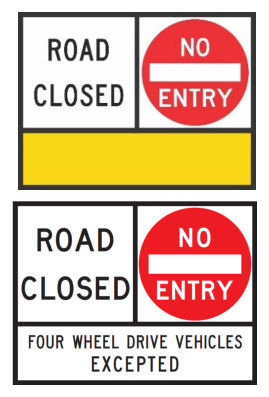
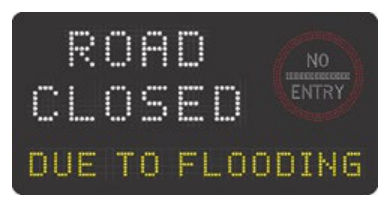
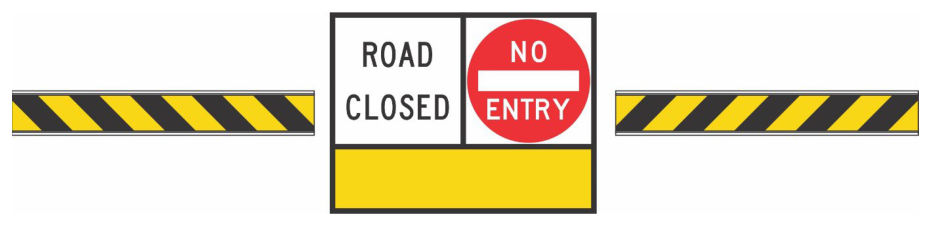
Figure A.3.1 provides example road closed multi-message arrangements with the DUE TO FLOODING black on yellow message and the LOCAL ACCESS PERMITS EXCEPTED black on white message being complementary to the enforcement sign but are not required for enforcement.
Barrier boards are required each side of a road closed arrangement (see Figure A.3.3) to completely block access to the roadway at the site of any road closure.