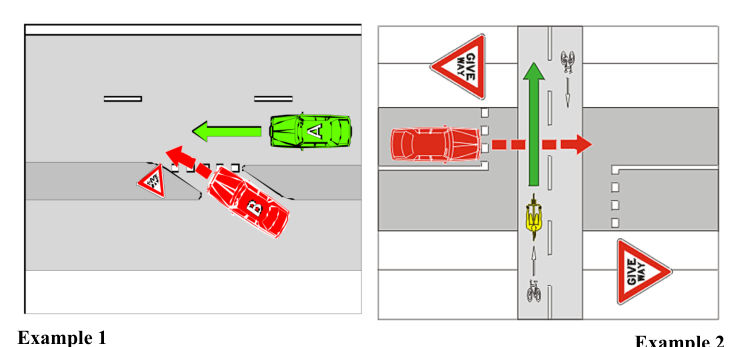
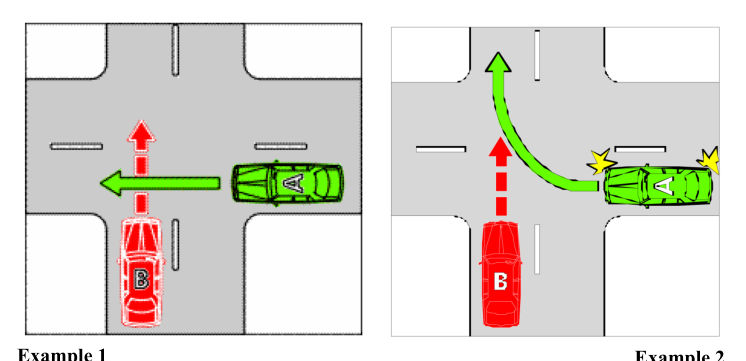
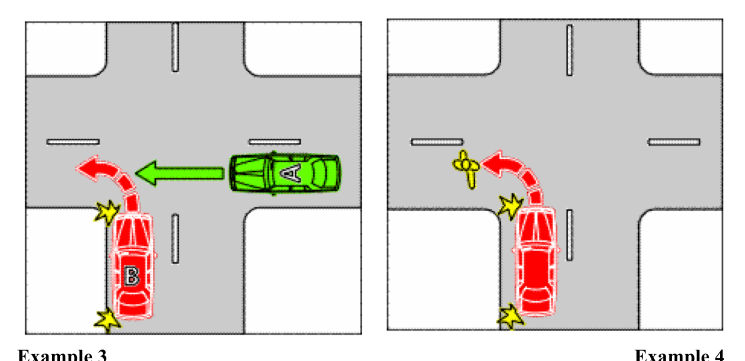
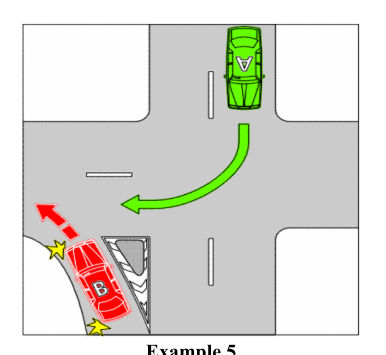
Division 2Giving way at an intersection without traffic lights or a stop sign, stop line, give way sign or give way line#
72Giving way at an intersection (except a T-intersection or roundabout)#
- (1)A driver at an intersection (except a T-intersection or roundabout) who is not facing traffic lights or a stop sign, stop line, give way sign, or give way line, must give way in accordance with this section.
Maximum penalty—20 penalty units.
- (2)If the driver is going straight ahead, the driver must give way to any vehicle approaching from the right (except a vehicle approaching or at a place with a stop sign, stop line, give way sign, or give way line).
- (3)If the driver is turning left (except if the driver is using a slip lane), the driver must give way to—
- (a)any vehicle approaching from the right (except a vehicle approaching or at a place with a stop sign, stop line, give way sign, or give way line); and
- (b)any pedestrian, or any rider of a bicycle or a personal mobility device, at or near the intersection crossing the road the driver is entering.
- (4)If the driver is turning left using a slip lane, the driver must give way to—
- (a)any vehicle approaching from the right or turning right at the intersection into the road the driver is entering (except a vehicle making a U-turn at the intersection); and
- (b)any pedestrian, or any rider of a bicycle or a personal mobility device, on or entering the slip lane.
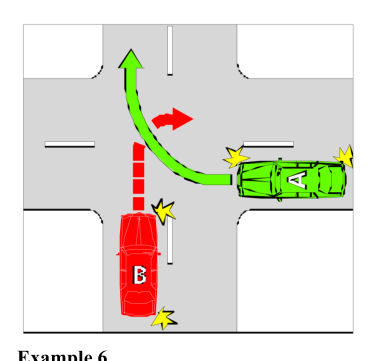
- (5)If the driver is turning right, the driver must give way to—
- (a)any vehicle approaching from the right (except a vehicle approaching or at a place with a stop sign, stop line, give way sign, or give way line); and
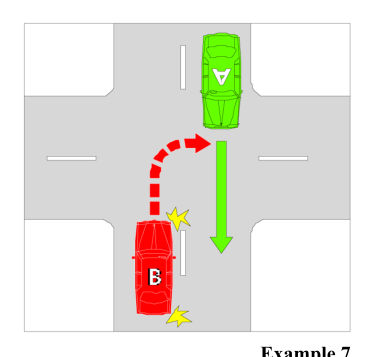
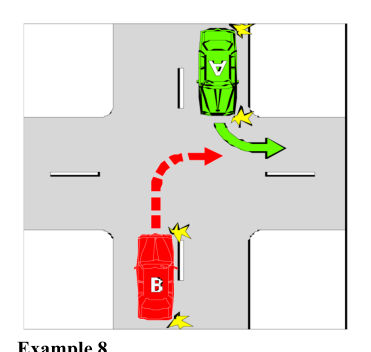
- (b)any oncoming vehicle that is going straight ahead or turning left at the intersection (except a vehicle turning left using a slip lane or a vehicle approaching or at a place with a stop sign, stop line, give way sign, or give way line); and
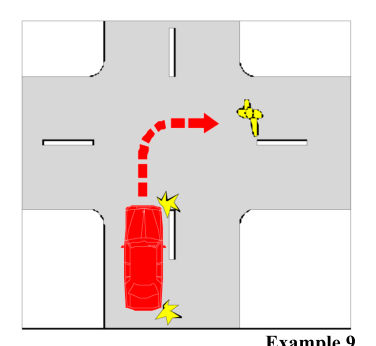
- (c)any pedestrian, or any rider of a bicycle or a personal mobility device, at or near the intersection crossing the road the driver is entering.
73Giving way at a T-intersection#
- (1)A driver at a T-intersection who is not facing traffic lights or a stop sign, stop line, give way sign, or give way line, must give way in accordance with this section.
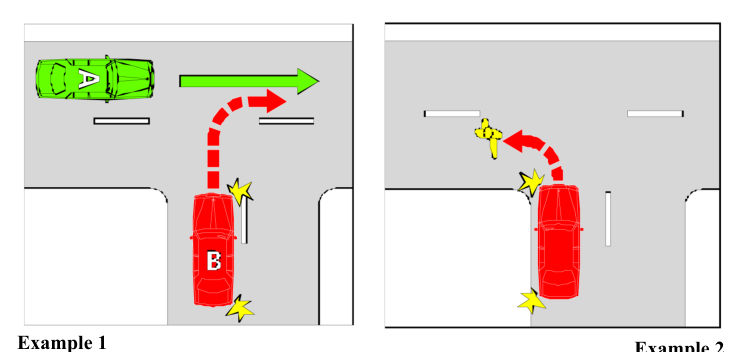
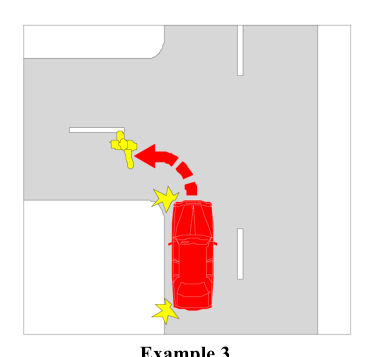
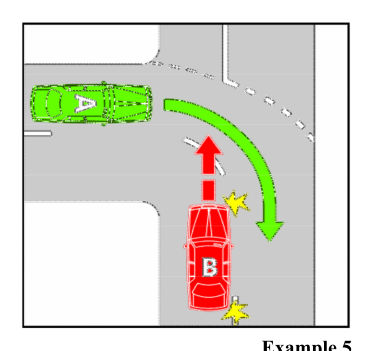
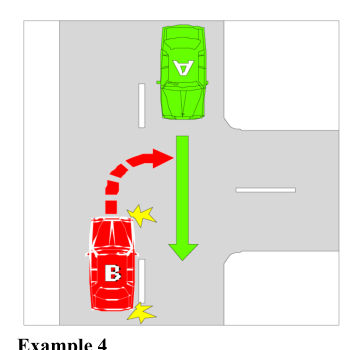
- (2)If the driver is turning left (except if the driver is using a slip lane) or right from the terminating road into the continuing road, the driver must give way to—
- (a)any vehicle travelling on the continuing road except—
- (i)a vehicle approaching or at a place with a stop sign, stop line, give way sign, or give way line; or
- (ii)a vehicle making a U-turn on the continuing road at the T-intersection; and
- (b)any pedestrian, or any rider of a bicycle or a personal mobility device, crossing the continuing road at or near the intersection.
- (3)If the driver is turning left from the terminating road into the continuing road using a slip lane, the driver must give way to—
- (a)any vehicle travelling on the continuing road (except a vehicle making a U-turn on the continuing road at the T-intersection); and
- (b)any pedestrian, or any rider of a bicycle or a personal mobility device, on or entering the slip lane.
- (4)If the driver is turning left (except if the driver is using a slip lane) from the continuing road into the terminating road, the driver must give way to any pedestrian, or any rider of a bicycle or a personal mobility device, crossing the terminating road at or near the intersection.
- (5)If the driver is turning from the continuing road into the terminating road using a slip lane, the driver must give way to—
- (a)any vehicle approaching from the right (except a vehicle making a U-turn from the terminating road at the T-intersection); and
- (b)any pedestrian, or any rider of a bicycle or a personal mobility device, on or entering the slip lane.
- (6)If the driver is turning right from the continuing road into the terminating road, the driver must give way to—
- (a)any oncoming vehicle that is travelling through the intersection on the continuing road or turning left at the intersection (except a vehicle approaching or at a place with a stop sign, stop line, give way sign, or give way line); and
- (b)any pedestrian, or any rider of a bicycle or a personal mobility device, crossing the terminating road at or near the intersection.
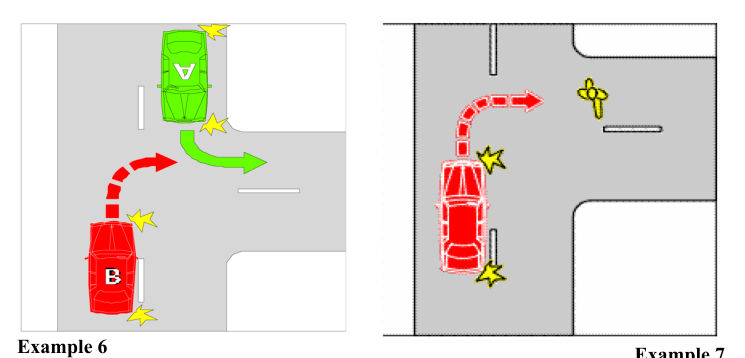
Example 6#
Example 7#
Driver turning right from the continuing road giving way to an oncoming vehicle turning left from the continuing road#
Driver turning right from the continuing road giving way to a pedestrian crossing the terminating road#
In example 6, vehicle B must give way to vehicle A.
In example 7, the vehicle must give way to the pedestrian.
- (7)In this section—
- (a)turning left from the continuing road into the terminating road, for a driver, includes, where the continuing road curves to the right at a T-intersection, leaving the continuing road to proceed straight ahead onto the terminating road; and
- (b)turning right from the continuing road into the terminating road, for a driver, includes, where the continuing road curves to the left at a T-intersection, leaving the continuing road to proceed straight ahead onto the terminating road.