Division 2Keeping to the left#
129Keeping to the far left side of a road#
- (1)A driver on a road, other than a multi-lane road, must drive as near as practicable to the far left side of the road.
Maximum penalty—20 penalty units.
- (2)This section does not apply to—
- (a)the rider of a motorbike; or
- (b)the rider of a bicycle or a personal mobility device when approaching, entering or riding in a roundabout.
- (3)In this section—
- road
- does not include a road-related area.
130Keeping to the left on a multi-lane road#
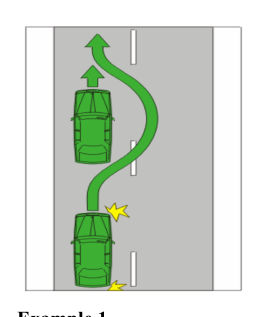
- (1)This section applies to a driver driving on a multi-lane road if—
- (a)the speed limit applying to the driver for the length of road where the driver is driving is over 80km/h; or
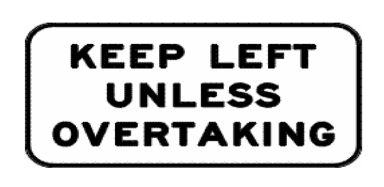
- (b)a keep left unless overtaking sign applies to the length of road where the driver is driving.
- (2)The driver must not drive in the right lane unless—
- (a)the driver is—
- (i)turning right or making a U-turn from the centre of the road; and
- (ii)giving a right change of direction signal; or
- (b)the driver is overtaking; or
- (c)a left lane must turn left sign or left traffic lane arrows apply to any other lane and the driver is not turning left; or
- (d)the driver is required to drive in the right lane under section 159; or
- (e)the driver is avoiding an obstruction; or
- (f)the traffic in each other lane is congested; or
- (g)the traffic in every lane is congested; or
- (h)the right lane is a special purpose lane in which the driver, under another provision of this regulation, is permitted to drive; or
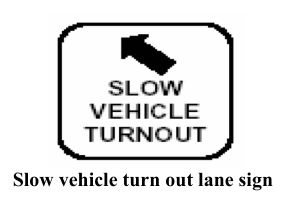
- (i)there are only 2 marked lanes and the left lane is a slow vehicle turn out lane; or
- (j)the driver is passing an emergency response vehicle under section 78A(2).
Maximum penalty—20 penalty units.
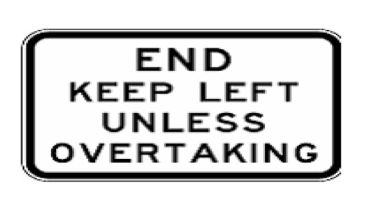
- (3)A keep left unless overtaking sign on a multi-lane road applies to the length of road beginning at the sign and ending at the nearest of the following— (a) an end keep left unless overtaking sign on the road;
(a) an end keep left unless overtaking sign on the road; (b) a traffic sign or road marking on the road that indicates that the road is no longer a multi-lane road; (c) if the road ends at a T-intersection or dead end—the end of the road.
(4) In this section—
- lane
- for a driver, means a marked lane for vehicles travelling in the same direction as the driver, but does not include a special purpose lane in which the driver is not permitted to drive.
- slow vehicle turn out lane
- means a marked lane, or the part of a marked lane, to which a slow vehicle turn out lane sign applies.
Examples—
Keep left unless overtaking sign · End keep left unless overtaking sign · Slow vehicle turn out lane sign
131Keeping to the left of oncoming vehicles#
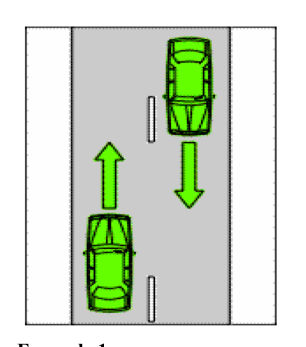
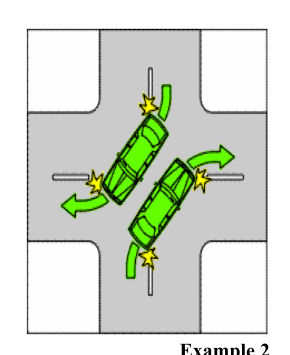
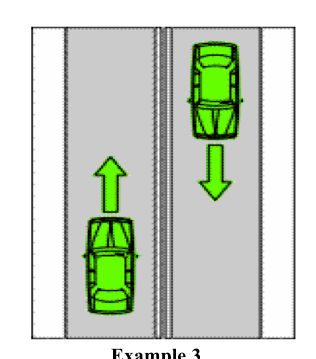
(1) A driver must drive to the left of any oncoming vehicle unless— (a) the driver is turning right at an intersection; and (b) the driver is passing an oncoming vehicle turning right at the intersection; and (c) there is no traffic sign or road marking indicating that the driver must pass to the left of the oncoming vehicle.
Maximum penalty—20 penalty units.
(2) This section does not apply to the rider of a motorbike that is a postal vehicle, a bicycle, a personal mobility device or an animal if— (a) the rider is riding on a footpath, nature strip or shared path; and (b) the rider is permitted to ride on the footpath, nature strip or shared path under this regulation; and (c) either— (i) the oncoming vehicle is not on the footpath, nature strip or shared path; or (ii) the oncoming vehicle is not permitted, under this regulation, to be on the footpath, nature strip or shared path.
Examples—
Example 1 · Example 2 · Driving to the left of an oncoming vehicle · Oncoming vehicles turning right passing to the right of each other
132Keeping to the left of the centre of a road or the dividing line#
(1) A driver on a two-way road without a dividing line or median strip must drive to the left of the centre of the road, except as permitted under section 133, 139(1) or 139A(1).
Maximum penalty—20 penalty units.
(2) A driver on a road with a dividing line (except 2 continuous dividing lines) must drive to the left of the dividing line, except as permitted under section 134, 134A, 139(2) or 139A(2).
Maximum penalty—20 penalty units.
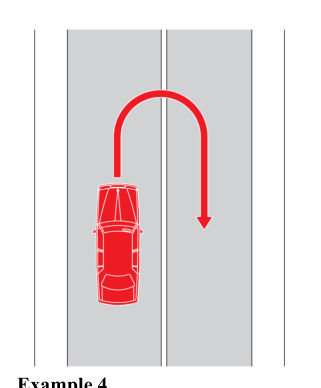
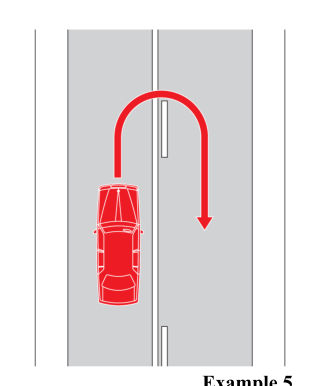
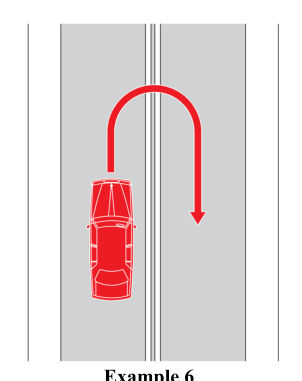
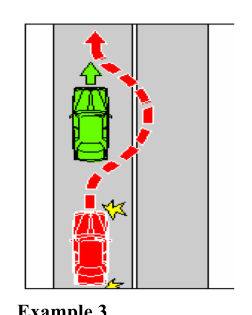
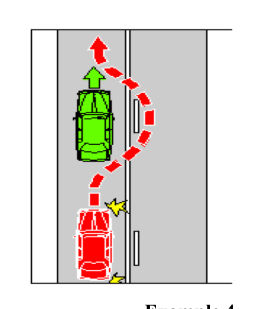
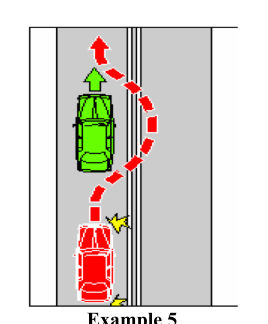
(2A) A driver on a road with a single continuous dividing line, a single continuous dividing line to the left of a broken dividing line or 2 parallel continuous dividing lines must not drive across the dividing lines to perform a U-turn.
Maximum penalty—20 penalty units.
(3) A driver on a road with 2 continuous dividing lines must drive to the left of the dividing lines, except as permitted under section 139(2) or 139A(2).
Maximum penalty—20 penalty units.
(4) This section, and sections 133, 134, 134A, 139(1) and (2) and 139A apply to a service road to which a two-way sign applies as if it were a separate road, but do not apply to any other service road.
(5) In this section—
- road
- does not include a footpath, nature strip, bicycle path, separated footpath or shared path.
Example of two-way sign—
Two-way sign
Examples for subsection (2)—
Driving to the left of a single continuous dividing line only
Driving to the left of a single continuous dividing line to the left of a broken dividing line
Driving to the left of 2 parallel continuous dividing lines
Examples for subsection (2A)—
Driving across a single continuous dividing line to perform a U-turn is not permitted
Driving across a single continuous dividing line to the left of a broken dividing line to perform a U-turn is not permitted
Driving across 2 parallel continuous dividing lines to perform a U-turn is not permitted
133Exceptions to keeping to the left of the centre of a road#
- (1)This section applies to a driver on a two-way road without a dividing line or median strip.
- (2)The driver may drive to the right of the centre of the road—
- (a)to overtake another driver; or
- (b)to enter or leave the road; or
- (c)to enter a part of the road of 1 kind from a part of the road of another kind (for example, moving to or from a service road or emergency stopping lane).
- (3)The driver may also drive to the right of the centre of the road if—
- (a)because of the width or condition of the road, it is not practicable to drive to the left of the centre of the road; and
- (b)the driver can do so safely.
134Exceptions to keeping to the left of a dividing line#
- (1)This section applies to a driver on a road with a dividing line.
- (2)If the dividing line is a single broken dividing line only, a broken dividing line to the left of a single continuous dividing line or 2 parallel broken dividing lines, the driver may drive to the right of the dividing line—
- (a)to overtake another driver; or
- (b)to perform a U-turn, unless the driver is prohibited from performing the U-turn under another provision of this regulation.
- (3)If the dividing line is a single continuous or broken dividing line, a broken dividing line to the left or right of a single continuous dividing line or 2 parallel broken dividing lines, the driver may drive to the right of the dividing line—
- (a)to enter or leave the road; or
- (b)to enter a part of the road of 1 kind from a part of the road of another kind (for example, moving to or from a service road or emergency stopping lane); or
- (c)to park in angle parking on the opposite side of the road.
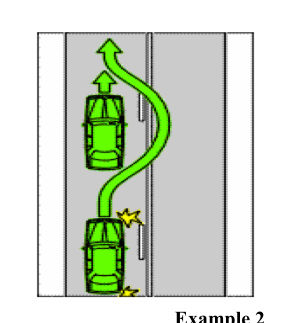
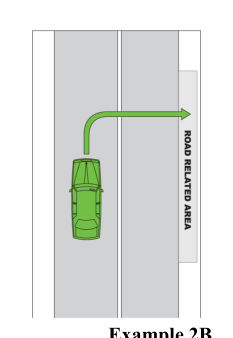
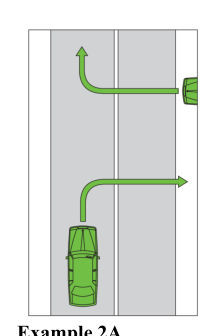
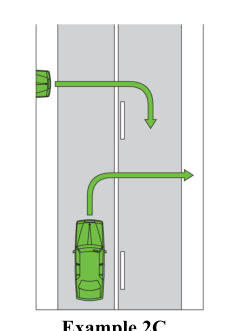
Examples—
Driving to the right of the centre of the road permitted—overtaking on a road with a broken dividing line only
Driving across a single continuous dividing line is permitted to enter or leave the road
Driving to the right of the centre of the road permitted—overtaking on a road with a broken dividing line to the left of a single continuous dividing line
Driving across a single continuous dividing line is permitted to leave the road to enter a road-related area
134Keeping to the left of a dividing line#
134AException to keeping to the left of a dividing line for drivers of long vehicles#
- (1)This section applies to the driver of a long vehicle on a road with a dividing line.
- (2)The driver may drive to the right of the dividing line if—
- (a)the driver is—
- (i)turning left from a single lane of a two-way road; or
- (ii)driving on a road that has a bend, including, for example, a bend that is designed for traffic calming; and
- (b)because of the width or condition of the road, or the bend, it is not practicable to drive to the left of the dividing line; and
- (c)the driver can do so safely.
- (3)In this section—
- long vehicle
- means a vehicle that, together with any load or projection, is 7.5m long, or longer.
135Keeping to the left of a median strip#
- (1)A driver on a road with a median strip must drive to the left of the median strip, unless the driver is—
- (a)entering or driving in a median strip parking area; or
- (b)required to drive to the right of the median strip by a keep right sign.
- (2)In this section—
Maximum penalty—20 penalty units.
- median strip
- does not include a painted island.
136Driving on a one-way service road#
A driver on the part of the road that is a service road (except a service road to which a two-way sign applies) must drive in the same direction as a vehicle travelling on the part of the road closest to the service road must travel. Maximum penalty—20 penalty units.
137Keeping off a dividing strip#
- (1)A driver must not drive on a dividing strip, except as permitted under this section or section 139(4) or 139A(3).
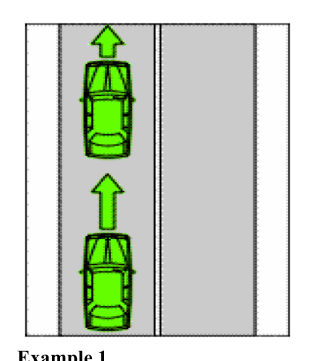
- (2)A driver may drive on a dividing strip that is at the same level as the road, and marked at each side by a continuous line—
- (a)to enter or leave the road; or
- (b)to enter or leave an area on the dividing strip to which a parking control sign applies if the driver is permitted to park in the area.
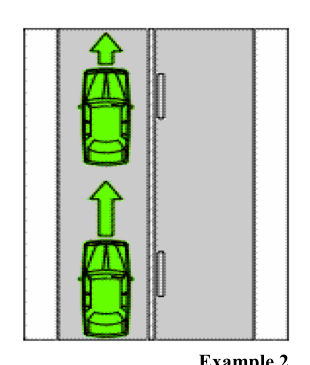
- (2A)For subsection (2), a dividing strip is taken to be at the same level as the road even if the dividing strip contains 1 or more pavement bars or markers.
- (3)In this section—
Maximum penalty—20 penalty units.
- dividing strip
- does not include a painted island.
- pavement bar
- means a raised rectangular block, with an approximately hemispherical cross-section, attached to an area of road, including, for example, a dividing strip—
- (a)perpendicular to the direction of travel of vehicles on the road; and
- (b)to—
- (i)augment the visibility of the area; and discourage, but not prohibit, movement of a vehicle in or across the area.
138Keeping off a painted island#
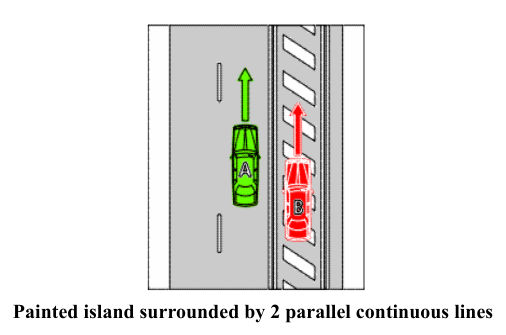
- (1)A driver must not drive on or over a single continuous line, or 2 parallel continuous lines, along a side of or surrounding a painted island, except as permitted under this section or section 139(4) or 139A(3).
Maximum penalty—20 penalty units.
- (2)A driver may drive on or over a single continuous line along the side of or surrounding a painted island for up to 50m—
- (a)to enter or leave the road; or
- (b)to enter a turning lane that begins immediately after the painted island; or
- (c)to enter a part of the road of one kind from a part of the road of another kind (for example, moving to or from a service road or emergency stopping lane); or
- (d)to park in angle parking on the opposite side of the road.
- (3)Subsection (2)(a) does not apply in the case of a painted island—
- (a)that separates a road that takes vehicles in 1 direction from another road that takes vehicles in the same direction at a place where the roads merge; or
- (b)that separates 1 part of a road from other parts of the road to create a slip lane.
139Exceptions for avoiding obstructions on a road#
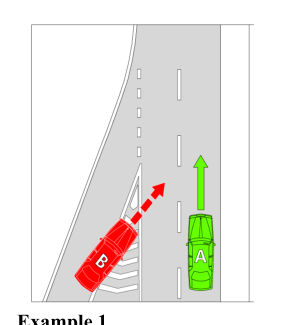
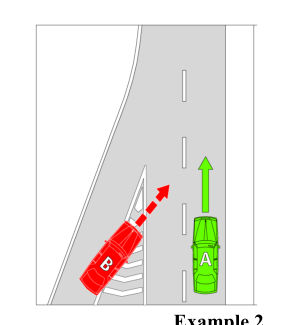
- (1)A driver on a two-way road without a dividing line or median strip may drive to the right of the centre of the road to avoid an obstruction if—
- (a)the driver has a clear view of any approaching traffic; and
- (b)it is necessary and reasonable, in all the circumstances, for the driver to drive to the right of the centre of the road to avoid the obstruction; and
- (c)the driver can do so safely.
- (2)A driver on a road with a dividing line may drive to the right of the dividing line to avoid an obstruction if—
- (a)the driver has a clear view of any approaching traffic; and
- (b)it is necessary and reasonable, in all the circumstances, for the driver to drive to the right of the dividing line to avoid the obstruction; and
- (c)the driver can do so safely.
- (3)For subsection (2), if the dividing line is a single continuous dividing line to the left of a broken dividing line, a single continuous dividing line only or 2 parallel continuous dividing lines, the hazard in driving to the right of the dividing line must be taken into account in deciding whether it is reasonable to drive to the right of the dividing line.
- (4)A driver may drive on a dividing strip, or on or over a single continuous line, or 2 parallel continuous lines, along a side of or surrounding a painted island, to avoid an obstruction if—
- (a)the driver has a clear view of any approaching traffic; and
- (b)it is necessary and reasonable to drive on the dividing strip or painted island to avoid the obstruction; and
- (c)the driver can do so safely.
139AExceptions for passing bicycle or personal mobility device rider#
- (1)A driver on a two-way road without a dividing line or median strip may drive to the right of the centre of the road to pass the rider of a bicycle or a personal mobility device that is travelling in the same direction as the driver if—
- (a)the driver has a clear view of any approaching traffic; and
- (b)the driving is necessary to comply with section 144A(1) for the passing of the rider; and
- (c)the driver can do so safely.
- (2)A driver on a road with a dividing line may drive to the right of the dividing line to pass the rider of a bicycle or a personal mobility device that is travelling in the same direction as the driver if—
- (a)the driver has a clear view of any approaching traffic; and
- (b)the driving is necessary to comply with section 144A(1) for the passing of the rider; and
- (c)the driver can do so safely.
- (3)A driver may drive on a dividing strip that is at the same level as the road, or on or over a single continuous line, or 2 parallel continuous lines, along a side of or surrounding a painted island to pass the rider of a bicycle or a personal mobility device that is travelling in the same direction as the driver if—
- (a)the driver has a clear view of any approaching traffic; and
- (b)the driving is necessary to comply with section 144A(1) for the passing of the rider; and
- (c)the driver can do so safely.
- (4)For subsection (3), a dividing strip is taken to be at the same level as the road even if the dividing strip contains 1 or more pavement bars or markers.