6.10Effect of surge protection devices on test waveform#

The purpose of the SPD is to dissipate to earth the high voltage and current energy of a surge to minimise the potential damaging effects of this energy on downstream equipment. The different technologies and SPD configurations will have various effects on the incoming waveform.

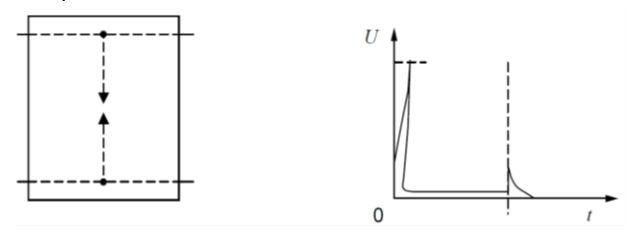
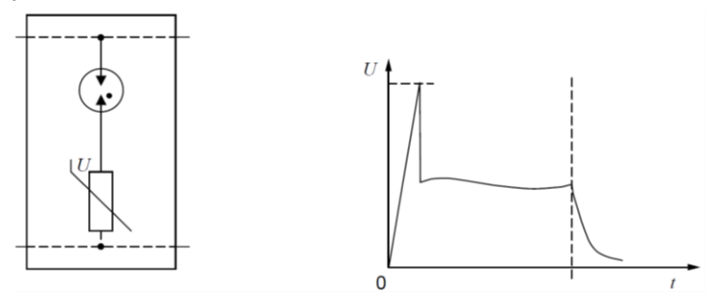
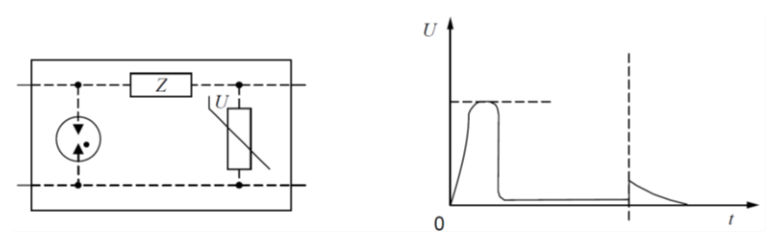
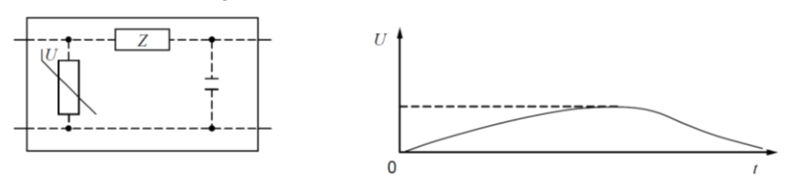
The following illustrations from IEC 61643 12 show the typical effects of the various SPD types on the incoming waveform (note that the voltage levels are only representative and do not indicate actual values).
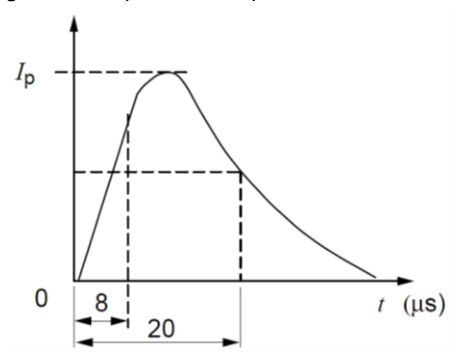
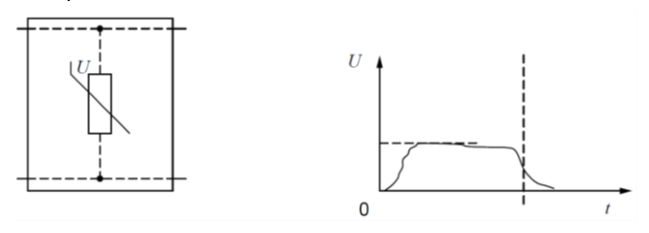
Figure 6.10(a) – Incoming waveform (IEC 61643 12)
Figure 6.10(a) – Incoming waveform (IEC 61643 12)p. 84
Figure 6.10(b) – Response of voltage limiting (metal oxide varistor) type surge protection device (IEC 61643 12)
Figure 6.10(b) – Response of voltage limiting (metal oxide varistor) type surge protection device (IEC 61643 12)p. 84
Figure 6.10(c) – Response of voltage switching (air gap) type surge protection device (IEC 61643 12)
Figure 6.10(c) – Response of voltage switching (air gap) type surge protection device (IEC 61643 12)p. 84
Figure 6.10(d) – Response of one-port combination (triggered spark gap / metal oxide varistor) type surge protection device (IEC 61643 12)
Figure 6.10(d) – Response of one-port combination (triggered spark gap / metal oxide varistor) type surge protection device (IEC 61643 12)p. 85
Figure 6.10(e) – Response of two-port combination (triggered spark gap / metal oxide varistor) type surge protection device (IEC 61643 12)
Figure 6.10(e) – Response of two-port combination (triggered spark gap / metal oxide varistor) type surge protection device (IEC 61643 12)p. 85
Figure 6.10(f) – Response of two-port voltage limiting (metal oxide varistor) type surge protection device with filtering (IEC 61643 12)
Figure 6.10(f) – Response of two-port voltage limiting (metal oxide varistor) type surge protection device with filtering (IEC 61643 12)p. 85
Source: TRUM Vol 4 Part 3 · pages 84–85 Open PDF at this page Search this document